The secret on the plate: which everyday foods almost halve the risk of a heart attack
There's an enjoyable way to eat that can dramatically reduce your risk of heart attacks and strokes. It's not about strict abstinence or constant calorie counting, but rather about a fascinating synergy of very specific foods. When these come together on the plate, they have a protective effect on your blood vessels, which is like an invisible shield. The exact ingredients that trigger this remarkable effect and why their combination has such amazing power for your health is hidden in a traditional diet.

Your free account
Save interesting articles, track your reading progress and connect with other readers. Joining Pandragora is free.
Discover more with Premium
Start a subscription to get unlimited access to all articles.
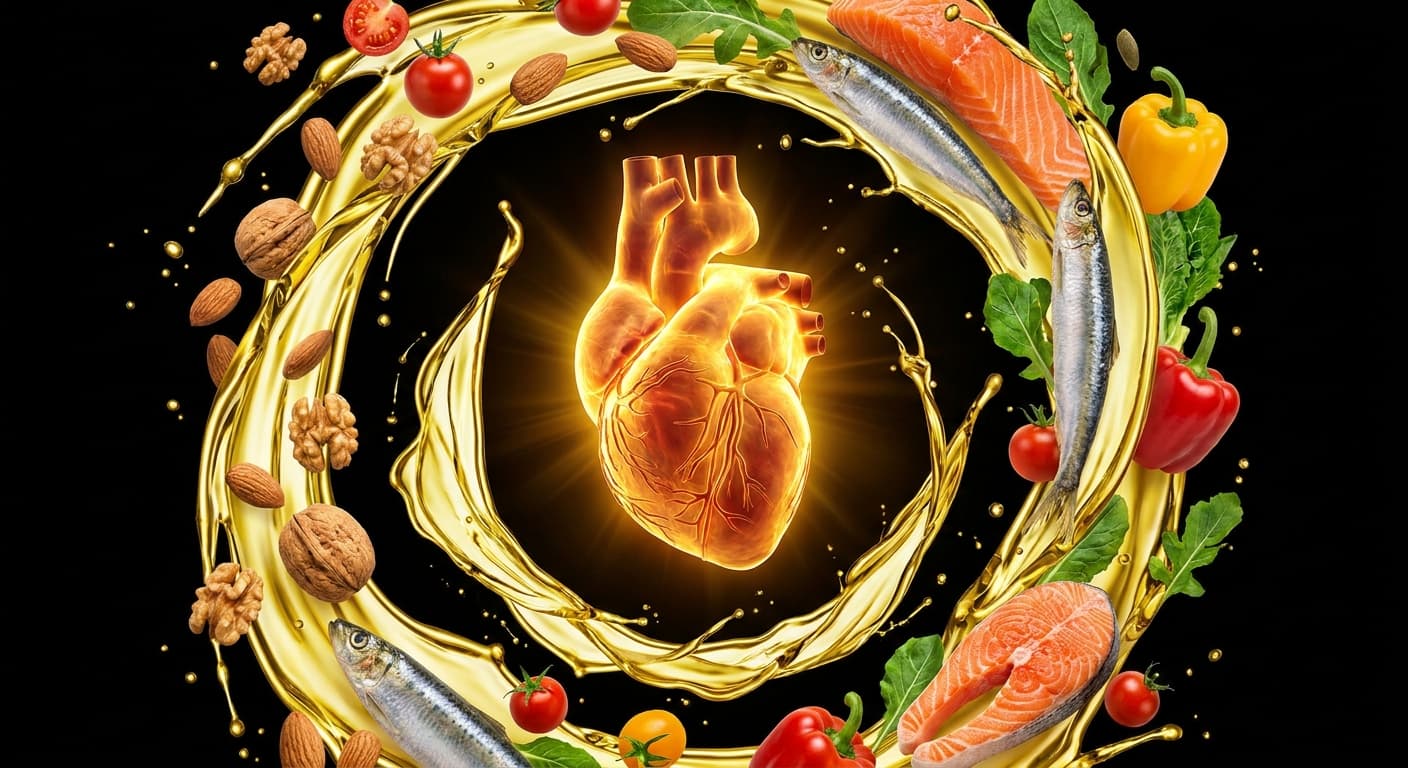
A Mediterranean diet rich in olive oil, vegetables, nuts and fish has been proven to protect your heart and blood vessels from serious illnesses. By eating this way, you can reduce your risk of life-threatening events like heart attacks and strokes by almost half. This also drastically reduces the likelihood of dying from heart disease. Although this diet does not directly change the general mortality rate over a few years, it does improve your vascular health and effectively slows down arteriosclerosis. With this simple change on your plate, you are investing directly in a healthier heart.
A recipe put to the test of science
How can we find out the truth about what really keeps us healthy? In a world full of contradictory nutritional trends and promises of salvation, the search for reliable answers is often like an arduous treasure hunt. But medicine has a tool that clears the fog of claims: the highest level of scientific evidence, a systematic summary and statistical analysis of the best-controlled clinical studies, a so-called meta-analysis.
Imagine standing by a raging river with a huge pan and having to move tons of rubble and sand in order to end up with the few real gold nuggets in your hands. Scientists have undertaken precisely this enormous hard work. They searched global databases for papers on the heart-protective effects of the Mediterranean diet, starting with a massive mountain of 4,685 potential articles. According to extremely strict quality criteria, they screened out all reports that were based on mere observations, assumptions or inaccurate protocols. At the end of this rigorous process, exactly four valuable studies remained: large, randomized controlled trials - the recognized ultimate in clinical research, in which participants are randomly assigned to different groups to exclude confounding influences.
These four milestones in nutritional medicine - known as CORDIOPREV, PREDIMED, Lyon Diet Heart and the Indo-Mediterranean Diet Heart Study - combine data from a total of 10,054 people. The participants, who were on average 57 years old, received continuous medical support over a long period of two to seven years. Some of them were healthy but had risk factors; others had already survived a heart attack and were looking for ways to prevent a second one. The central, fascinating question behind this huge trove of data is: Can consciously changing daily meals protect the human heart and blood vessels from failure in the long term as effectively as modern drugs?
The anatomy of the Mediterranean diet
When we think of Mediterranean food, images of steaming pasta, crispy pizza and sumptuous cheese platters often come to mind. But what science understands to be a true Mediterranean diet has very little to do with the typical holiday feasts. It is not a free pass for unlimited enjoyment, but rather a highly precisely balanced nutritional pattern. The main role in this culinary concept is played by fat - more precisely, plenty of olive oil as the primary source of fat. It is flanked by an abundance of fresh vegetables, sun-ripened fruit, nuts and natural grains. Fish and poultry are only served in moderate quantities, while dairy products, red meat, processed meat products and sugary sweets are extremely rare. Even a glass of wine is allowed, but only in moderation and traditionally directly with meals.
To understand the effect of this pattern, it helps to take a look at the specific specifications from the large clinical studies. In the renowned PREDIMED study, for example, the participants did not have to count calories or exert themselves while exercising. Instead, they were given clear quantitative guidelines: either they included around a liter of extra virgin olive oil in their diet every week, or they consumed exactly 30 grams of a mixture of walnuts, hazelnuts and almonds every day. In the Indo-Mediterranean Diet Heart Study, the diet was specifically enriched with valuable alpha-linolenic acid - a vital omega-3 fatty acid that was absorbed through the abundant consumption of whole grain products, fruit, vegetables as well as walnuts and almonds.
But why does this combination work so surprisingly well? The answer lies in a biological interaction. The Mediterranean diet is not a soloist who shines with a single brilliant performance, but rather a perfectly coordinated orchestra. A single ingredient like olive oil or a handful of nuts does not, on its own, produce a health symphony. Only when the natural antioxidants from the vegetables, the fiber from the grain and the healthy fatty acids from the fish play in exactly the right rhythm does a cell-protecting melody emerge. This synergistic interaction, i.e. the mutually reinforcing interaction of all components, is the real power of this form of nutrition. The first historical evidence of this phenomenon was provided by the famous "Seven Countries Study", which showed that people in certain Mediterranean regions had remarkably healthy hearts despite apparently high-fat diets. The bare numbers of modern medicine reveal how this harmonious alliance of nutrients actually works in the human body and what protective shields it puts up there.
The great protective shield for the heart
When it comes to our hearts, we usually don't fear a creeping malaise, but rather the sudden, life-threatening catastrophes that suddenly paralyze the entire system. In medicine, there is a precise collective term for these most severe shocks to the cardiovascular system: severe adverse cardiovascular events, often abbreviated in the medical community as MACE. Doctors use this term to summarize the most serious events that can put a strain on the cardiovascular system - from classic heart attacks to strokes to cardiovascular-related death.
Large clinical analyzes now show that a consistent switch to the Mediterranean diet acts like a massive wave that throws itself against these life-threatening storms. Statistically speaking, changing your diet reduces the likelihood of suffering such a serious event by almost half. The statistical measure for this, the so-called odds ratio, is 0.52. In plain language, this means: The statistical chance of suffering such a serious event is almost halved by changing your diet. This finding is highly statistically significant with a confidence interval of 0.32 to 0.84 and a p-value of 0.008.
But as impressive as this protective shield is, medical research warns of an important limitation. The breakwater can withstand the waves, but it does not work exactly the same well on every beach. However, when the data were summarized, there was a very high heterogeneity of 87 percent. This means that the measurement results varied greatly between the different clinical studies. While some participants experienced almost spectacular protection, the effect was less extreme in other patient groups. These fluctuations show that our biological system and our living conditions are highly complex - and they raise the crucial question of what specific types of damage the protective shield holds tightest and where nutrition reaches its purely mechanical limits.
Where nutrition wins – and where it doesn’t change anything
To understand these different protective effects, it helps to imagine your vascular system as a huge, extensive network of roads. There is constant traffic on these biological highways, supplying every single cell in your body with vital oxygen and nutrients. Now, if we delve deep into the clinical data, we see that the Mediterranean diet works like a highly efficient accident prevention system. It is extremely effective in preventing the dreaded, sudden full closures on the main traffic arteries.
Such a sudden collapse directly in the central drive organ is the classic heart attack, which in medicine is precisely referred to as myocardial infarction. Clinical data shows a clear protective effect here: the risk of such a heart attack decreases noticeably through consistent changes in diet. The statistical analyzes show an odds ratio of 0.62, supported by a confidence interval of 0.41 to 0.92 and a p-value of 0.02. Even if the results show a moderate fluctuation between the patient groups examined - expressed by a heterogeneity of 56 percent - the protective direction remains unmistakable.
This effect is even clearer and surprisingly consistent in the important access routes to your thinking organ. A stroke occurs when the oxygen supply to the brain abruptly stops - a severe complete blockage with often serious consequences. Here, the scientific evaluation delivers an extremely stable result: The probability of a stroke falls by more than a third, which is expressed in an odds ratio of 0.63 (with a confidence interval of 0.48 to 0.87 and a highly significant p-value of 0.002). The special thing about this finding is that the statistical heterogeneity is exactly zero percent. This means that the data is completely consistent across all clinical studies included. The protective effect against the dreaded stroke is one of the most reliable constants of the Mediterranean diet.
But as powerful as this preventive protection against acute full closures is, at one point the power of nutrition reaches a purely mechanical limit. If a route has been extremely narrowed over decades by thick, hardened deposits, changing the flow alone is often no longer sufficient. In such advanced cases, the medical road maintenance department has to intervene directly on site to mechanically expand the blocked tube again - a surgical or catheter-assisted procedure that doctors call revascularization, for example by inserting a vascular support, a so-called stent, or bypass surgery.
Surprisingly, the pooled clinical data show that the Mediterranean diet did not statistically significantly alter the frequency of these surgical vascular reopenings. With an odds ratio of 0.74, a wide confidence interval of 0.30 to 1.27 and a p-value of 0.06, no scientifically reliable difference can be determined between the diet groups. Even the measured heterogeneity of 16 percent does not change this zero result. Although the Mediterranean diet provides excellent protection against acute vascular occlusions, it does not statistically reduce the need for subsequent surgical interventions to reopen the vessels. For those affected, this means that despite the protective effects of the diet, mechanical treatments to directly restore blood flow to the same extent remain necessary.
The paradox of mortality
If we have the power to prevent the most serious accidents in our lifelines, the ultimate question immediately comes to mind: Does this change in diet actually give us more life in the end? The answer that science provides holds a fascinating surprise - a medical mystery that at first glance seems like a contradiction.
Let's first look at the successes on the heart front. Here, the summarized data from clinical research shows an extremely clear and encouraging picture. The risk of dying as a result of cardiovascular disease decreases significantly with the Mediterranean diet. The statistical analysis here shows an excellent odds ratio of 0.54, supported by a confidence interval of 0.31 to 0.94 and a p-value of 0.03. This means that the chance of such a heart-related death is almost halved. Although the data varies moderately between individual studies - the statistical heterogeneity is 55 percent - this life-saving protective effect for the cardiovascular system remains a scientifically proven basis.
But this is exactly where we come across the great paradox. When you broaden your perspective and examine all-cause mortality - that is, the risk of dying from any cause during the study period - this statistical advantage surprisingly evaporates. With an odds ratio of 0.77, a wide confidence interval of 0.51 to 1.15 and a p-value of 0.20, no mathematically measurable difference can be determined between the Mediterranean diet and the conventional control diets. In these studies, those who eat a Mediterranean diet are statistically less likely to die from cardiovascular disease, but overall they do not live demonstrably longer.
How can this biological puzzle be solved? Think of the situation like a club with an extremely skilled bouncer. This bouncer is an absolute specialist in consistently fending off a very specific, dangerous group of troublemakers - in our case, the deadly cardiovascular complications. Thanks to his work, things remain peaceful inside the club and no one is harmed by these particular rioters. But the bouncer has no influence on the club's curfew. When the night is over and the lights come on, the disco closes to all guests at exactly the same time.
Applied to our biology, this means: The Mediterranean diet is a brilliant protective shield for your blood vessels, but it is not an elixir for immortality. While the risk of a fatal heart attack decreases, the human body still remains subject to the laws of aging and other biological threats. Those who are protected from cardiac death may die over time from other age-related causes such as cancer or serious infections. In addition, even the most complex clinical studies usually only last two to seven years. In this time-limited window, the "background noise" of all other conceivable causes of death is simply too great for an extension of the maximum lifespan to be statistically isolated. The Mediterranean diet optimizes your quality of life and is highly effective in protecting your most important organ from premature failure - but it cannot simply stop the fundamental clock of biological decline.
A deep look into the blood vessels
To truly understand how this protection works in detail, we need to change our perspective. We need to look away from the mere death statistics and directly to where the drama of survival plays out every day: deep inside your blood vessels. How do the sensitive elastic tubes of your body change when they are bathed in the active ingredients of the Mediterranean diet for years?
Answers to this are provided by a groundbreaking clinical study called CORDIPREV, which is considered to be the most comprehensive and longest-running study of its kind to date. Over a period of seven years, 1,002 patients were closely examined who already suffered from severe coronary heart disease - i.e. whose vessels were already demonstrably damaged. The doctors divided the test subjects into two groups: one half switched to the Mediterranean diet, while the other half followed a classic, low-fat diet. At the end of the seven years, a striking result emerged: Patients in the Mediterranean group had a 26 percent lower risk of a major adverse cardiovascular event than those on a low-fat diet.
To make this huge difference physically tangible, imagine the work of a plumber inspecting a home's pipes after years of maintenance. He doesn't rely on estimates; He takes a precision caliper and directly measures the thickness of the lime deposits and the elasticity of the pipe walls. That's exactly what the researchers did directly on the blood vessels.
The first mechanical evidence concerns the gradual calcification of the arteries, atherosclerosis. The doctors used ultrasound to measure the thickness of the inner two vascular layers of the carotid artery, known in specialist medicine as intima-media thickness. Something extraordinary happened to the patients who ate a Mediterranean diet: the “rust” in the pipes measurably receded. After just five years, the vessel wall thickness had significantly reduced by 0.027 millimeters (± 0.008 mm) compared to the initial value. This process continued even further: after seven years, the wall thickness had shrunk by 0.031 millimeters (± 0.008 mm). The Mediterranean diet not only stopped the progressive narrowing of the blood vessels, but also actually reversed the biological aging process of the artery wall.
But clean pipes are of little use if they are rigid and brittle. The scientists therefore examined the so-called endothelial function as a second factor - i.e. the ability of the innermost vascular layer to expand elastically and smoothly when blood flow increases, which is measured in medicine as flow-mediated dilatation. Here too, the “recovery plan” of the Mediterranean diet showed its full effect. The blood vessels of the Mediterranean group had an extensibility of 3.83 percent (with a 95% confidence interval of 2.91 to 4.23%). In the patients on the low-fat diet, however, this value was a meager 1.16 percent (95% confidence interval: 0.80 to 1.98%). This means a highly significant difference of 2.63 percent in favor of the Mediterranean diet (with a 95% confidence interval of 1.89 to 3.40% and a p-value of 0.011).
These numbers are direct, measurable evidence that the rich ingredients of the Mediterranean diet, especially extra virgin olive oil, profoundly improve the function and health of the vascular walls. They keep the biological transport routes elastic and resistant to pressure peaks - even if the system has already been damaged by an existing heart disease.
Scandals, blind spots and the open ending
But as flawless as these biological repair mechanisms may sound on paper, the real world of science is not a sterile laboratory where everything goes perfectly according to plan. Even the brightest light casts shadows, and those seeking the truth about our diet must also look where mistakes happen, data needs to be corrected, and human nature challenges mathematical precision.
Even in the most closely monitored large-scale medical projects, irregularities sometimes creep in. A particularly prominent example of this is the PREDIMED study, which, with originally 7,447 participants, was the largest and most influential primary prevention study in this area. Years after its publication, it was revealed that there had been technical errors in the sensitive process of random allocation. Instead of randomly assigning each test subject to a group, those responsible at some locations put entire clinics or even family members in the same household in the same nutritional group without true random selection.
This violation of the ironclad rules of clinical trials resulted in the paper having to be withdrawn and subjected to an extremely laborious re-analysis. The researchers consistently excluded from the data exactly 1,588 participants who had such deviations in the protocol. Only after this radical cleanup was the study republished. The reassuring but also fascinating result of this error-corrected analysis: the error did not shake the actual foundation. The incidence of cardiovascular disease in the groups with a Mediterranean diet remained about 30 percent lower in the adjusted version than under the control diet.
In addition to such organizational missteps, nutritional medicine is struggling with a very fundamental, almost insoluble problem: In addition, the lack of double blinding is an important limitation, as most of the studies included were only single blinded. When testing a new heart tablet, it's simple: neither the treating doctors nor the patients know who is getting the real active ingredient and who is getting an ineffective sugar tablet. But it's hard to hide from you whether there's a juicy salmon fillet with extra virgin olive oil on your plate or a standard low-fat dish. Since the participants know exactly what they eat, it can never be completely ruled out that this awareness also influences their other health behavior. In addition, the inadequate recording of adverse events in most studies makes it difficult to accurately weigh up the benefits and risks of the Mediterranean diet.
There are also geographical and cultural boundaries. Much of the data behind the global reputation of the Mediterranean diet comes from regions such as Spain and France. In these countries, acceptance of a diet rich in olive oil and vegetables is deeply rooted in the culture. It is by no means clear whether such a concept can be transferred one-to-one to people in other parts of the world who have completely different eating habits. The willingness to adhere to such a diet over many years could be significantly lower in other cultures.
Our biological diversity also still raises questions. The CORDIPREV study, for example, showed that the Mediterranean diet as part of secondary prevention led to a significantly greater risk reduction in men than in women. Why this difference exists and whether hormonal or other physiological factors play a role has not yet been sufficiently clarified. There is simply a lack of large, gender-specific studies to clearly break down this discrepancy.
In order to answer these open questions and understand the mechanisms behind the protective shield in detail, research continues unceasingly in the background. Ongoing clinical trials such as the CADIMED project are currently investigating how the Mediterranean diet affects specific biomarkers of inflammation and endothelial damage. The influence on substances such as C-reactive protein, interleukin-6 (IL-6) and tumor necrosis factor-alpha (TNF-alpha), which serve as biomarkers for inflammation and vascular damage, is analyzed.
The journey to deciphering the optimal diet is far from over. But despite all the methodological hurdles, geographical boundaries and corrected data, the scientific compass continues to point in a clear direction: the key to a resilient cardiovascular system lies not in a single, remarkable pill, but in the daily, harmonious alliance on your plate.
──────────────────────────────────────────────────
Those
Sneha Annie Sebastian, Inderbir Padda, Gurpreet Johal (2024). Long-term impact of mediterranean diet on cardiovascular disease prevention: A systematic review and meta-analysis of randomized controlled trials. DOI: 10.1016/j.cpcardiol.2024.102509
──────────────────────────────────────────────────
Share or save this article
Share this post or save it for later. A like helps make relevant content more visible.
We place great emphasis on accuracy in our research. Nevertheless, errors can occur. We also recommend reading the corresponding primary literature listed in the sources. The content on Pandragora is for general information only and does not replace professional medical advice or treatment. Use of the information provided is expressly at your own risk and responsibility; any liability is excluded.