A genetic switch: How upgraded immune cells defeat incurable diseases
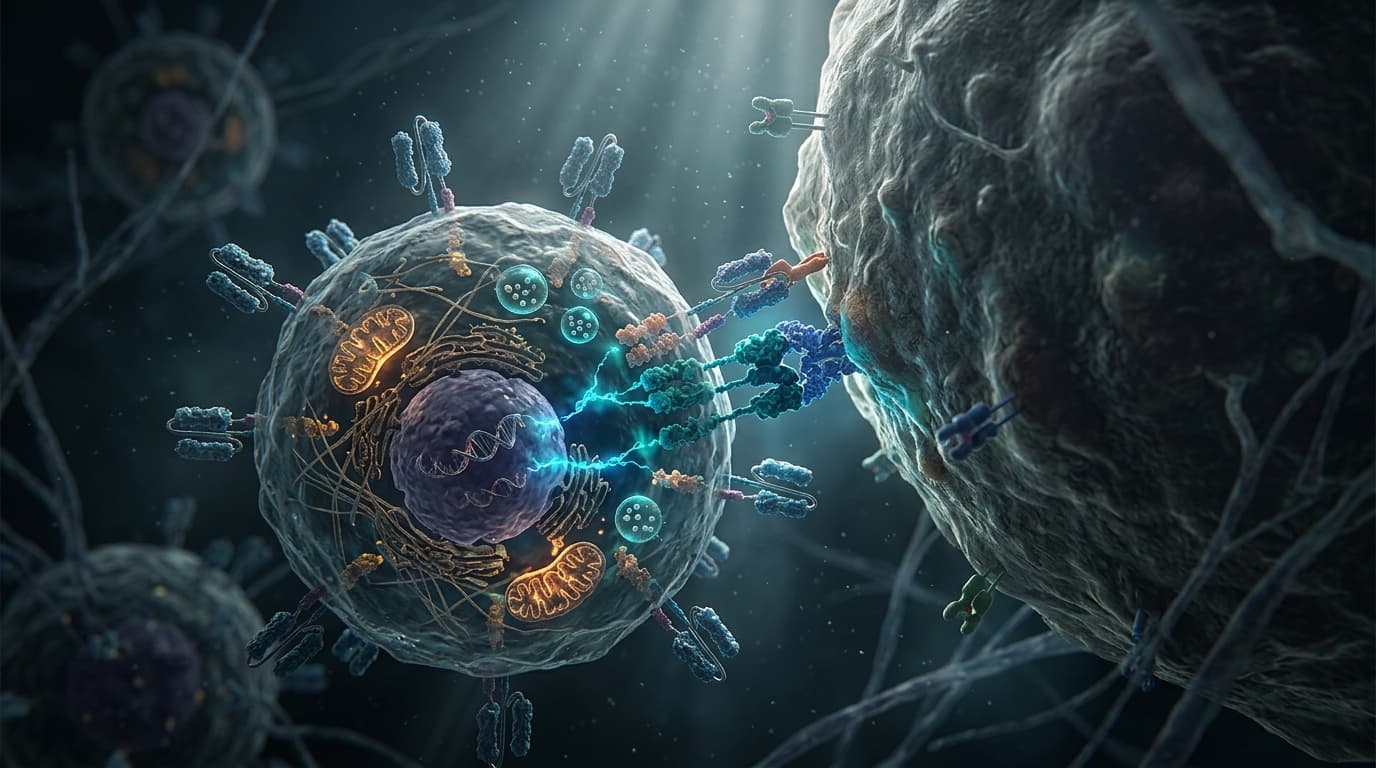
Imagine if tiny sentinels could be taken directly from your blood, upgraded in the laboratory with a completely new blueprint, and sent back into your body as highly specialized hunters. That's exactly what happens with a groundbreaking method that brings seemingly unassailable threats to their knees. Through targeted genetic intervention, normal immune cells are reprogrammed into so-called CAR-T cells (chimeric antigen receptor T cells). These living drugs break through the perfect camouflage of malignant tumors and precisely eliminate them. This technology is now showing astonishing success even in the treatment of severe autoimmune diseases and dangerous viruses. But how exactly does a simple cell become such a precise weapon? And what hidden mechanism decides whether this biological protective shield completely destroys the attacker or whether it comes to nothing?

Your free account
Save interesting articles, track your reading progress and connect with other readers. Joining Pandragora is free.
Discover more with Premium
Start a subscription to get unlimited access to all articles.
CAR T-cell therapy is a groundbreaking procedure in which your own immune cells are genetically modified so that they can independently detect and destroy cancer cells. Since the first discoveries in immunotherapy, this technology has developed rapidly and has already achieved impressive healing successes in various types of blood cancer. Scientists are currently researching increasingly intelligent cell generations in order to successfully treat solid tumors and inflammatory diseases such as multiple sclerosis or HIV. However, you should know that challenges such as high costs and possible strong immune reactions of the body still need to be minimized. Innovative approaches use modern messenger RNA (mRNA) and the CRISPR gene scissors to simplify production and make cells more resistant to exhaustion. This path from concept to cure promises a future in which previously incurable diseases can be controlled by specifically increasing your own immune defenses.
The Secret of the Living Medicine
But why isn't it enough to simply boost the natural musicians of your orchestral immune system? The problem lies in perfect camouflage. Imagine that every cell in your body is a guest in an exclusive club. To gain entry or identify itself, each cell must show an ID card: the major histocompatibility complex, often simply called MHC. On this ID card, the cell shows small fragments of its internal proteins. Your T cells act as bouncers. They check these IDs with their T-cell receptors. If they find a suspicious fragment there – a so-called antigen – they sound the alarm and destroy the cell.
But cancer cells are masters of deception. They learned that they could escape the bouncers if they simply threw away their ID. They downregulate the major histocompatibility complex on their surface. Without MHC identification, the T cell is at a loss in front of the cancer cell: it simply does not “see” the enemy, even if he is standing directly in front of it. In addition, many of your natural T cells only have a very weak binding force towards the body's own tumors because your body has trained them not to attack its own tissue.
For a long time, the vision of “magic bullets,” which were conceived over a hundred years ago as precise weapons against evil, remained an unattainable dream. Although there are modern therapies today that target precisely these T cell receptors - such a procedure was only recently approved for the treatment of advanced synovial sarcoma, a special type of soft tissue cancer - they always come up against the same limit: they are dependent on the MHC certificate. As soon as the tumor hides it, therapy is powerless. In addition, not every person has the appropriate T cells that could accurately recognize the characteristics of their specific tumor.
So how do you break this security mechanism? The answer lies in a fascinating form of biological modification. If nature doesn't provide us with the right tools, we build them ourselves. Researchers began to directly alter the genome of T cells. To do this, they use viruses that have been rendered harmless, so-called viral vectors. These retroviruses or lentiviruses act as tiny gene ferries. They introduce an artificially designed blueprint into the nucleus of the T cell.
This new blueprint allows the cell to form an entirely new receptor on its surface. The goal of this genetic upgrade is to fundamentally reprogram the T cell. They should no longer have to rely on the MHC ID card to identify the enemy. But how do you design a receptor that simultaneously has the precision of a sniffer dog and the striking power of a warrior? Scientists found the solution in a mythological hybrid creature.
The invisible enemy and the missing piece of the puzzle
In ancient mythology, the chimera was a fearsome creature made up of parts of a lion, a goat and a snake. In modern medicine, this concept became the blueprint for a revolution. In the late 1980s, researchers like Kurosawa and later Eshhar began outsmarting evolution by fusing the best features of two completely different worlds of the immune system. They created the so-called chimeric antigen receptor, or CAR for short.
You can think of this artificial receptor as a state-of-the-art upgrade for a T cell. Normally a T cell is like a police officer who has to laboriously check ID cards. The chimeric antigen receptor, on the other hand, equips the cell with a biological search head that comes directly from antibodies. This outer part is called a single chain variable fragment. It works like a high-precision gripper arm that recognizes a very specific feature on the surface of the cancer cell - the antigen - and clings to it.
The genius of this design is its independence: Because the gripper arm binds directly to the target, the T cell no longer has to rely on the major histocompatibility complex. The cancer can safely throw away its “MHC card”; The CAR-T cell still recognizes him by his external appearance. But how does the inside of the cell find out that the gripping arm has found something outside?
To do this, the scientists coupled the outer gripping arm with an internal firing mechanism of the T cell, the so-called CD3 zeta chain. In the first generation of this miracle weapon, the plan was simple: As soon as the gripping arm grabs a target, the zeta chain transmits a signal into the cell interior that gives the order to attack. This marked the birth of the first generation of CAR-T cells. It was a triumph of engineering that worked perfectly in the lab in 1993: the cells identified their enemies and destroyed them in the petri dish with merciless efficiency.
But why did this ingenious design initially lead to bitter disappointment in the patients' real bodies?
When the first patients were treated with these cells, something unexpected happened. The cells found their targets, but they didn't last long. It was like building a car with a perfect navigation system and a powerful starter motor, but forgetting to install a gas tank. The first generation CAR-T cells were able to start the engine and drive off briefly, but they ran out of fuel after a few meters. They hardly reproduced in the body, released too few messenger substances and often died within a very short time due to programmed cell death, apoptosis.
The problem lay in the cell's communication. In your immune system, a single command to attack - the so-called signal 1 - is never enough. Your body has built-in safety mechanisms to ensure that T cells don't run amok at every little stimulus. For full activation and long-term survival, a T cell always needs confirmation, a second signal. Without this additional confirmation, the cell falls into a state of rigidity or simply dies. The researchers realized that in order to truly defeat cancer, they would not only have to build the navigation system and the starter motor, but also radically redesign the cell's entire energy system.
The breakthrough and the second signal
The solution to this problem was as simple as it was ingenious: the researchers simply installed a turbocharger in the T cell. In the late 1980s, scientists discovered that T cells needed a second, confirmatory signal to really get going. They identified a molecule called CD28, which acts as an additional source of energy for the immune system. When this signal 2 occurs along with the initial enemy detection, something magical happens: the T cell switches from mere detection mode to a highly efficient attack and proliferation mode.
The second generation of CAR T-cell therapy was born when engineers expanded the receptor blueprint to include this costimulatory domain. The outer seeker head and the inner detonator were now also fused with a biological power plant - usually either CD28 or another amplifier called 4-1BB. Suddenly the “car” not only had a destination in the navigation system, but also a huge tank and an engine that cools itself.
The difference between these two drives is subtle, but crucial to the success of therapy. While CD28 ensures explosive proliferation and a massive release of cytokines - i.e. maximum impact in the shortest possible time - 4-1BB acts more like an endurance marathon runner. Cells with this drive often remain active in the patient's body for much longer and form an immunological memory. But how does this technological leap feel for a person who had actually already given up?
The story of William Ludwig provides the answer. In 2011, he became the first adult to be treated for chronic lymphocytic leukemia at the University of Pennsylvania with these novel, second-generation cells. What happened next was nothing short of a miracle: the genetically upgraded cells multiplied rapidly in his blood, tracking down every single cancer cell and destroying them. Ludwig remained completely cancer-free for over ten years until he finally died in early 2021 as a result of a COVID-19 infection.
Shortly after this success in 2012, the next milestone came with the then six-year-old Emily Whitehead. She was the first child to receive this therapy for an aggressive form of acute lymphoblastic leukemia. However, she also showed the dark side of this enormous impact: her body reacted with a violent cytokine release syndrome, a kind of immunological conflagration that almost cost her her life. But doctors quickly learned to tame this “cytokine storm” with medication. Today, more than twelve years later, Emily Whitehead is still healthy - living proof that a single infusion can permanently change a person's fortunes.
This breakthrough triggered a wave of approvals. Initial successes focused on a trait called CD19, which occurs almost exclusively on B cells. But research didn’t stop there. Scientists looked for new targets and found an antigen called BCMA. This feature is found primarily in cells of multiple myeloma, a bone marrow disease that has so far been difficult to cure. With new CAR-T products, it was possible to achieve impressive results here too: in many patients, the tumors almost completely disappeared, which led to the first approvals for these clinical pictures.
In an effort to make the cells even more powerful, researchers even designed a third generation of receptors. The idea was tempting: Why not simply combine both drivers – CD28 and 4-1BB – in a single receptor? They hoped for the perfect mix of power and endurance. But nature is often more complicated than expected. Initial clinical studies showed that this double stimulation sometimes overwhelms the cells to such an extent that they become exhausted more quickly or show unpredictable reactions. There seems to be a fine line between optimal activation and total overstimulation.
Despite these impressive victories against blood cancer, a daunting challenge remained. While CAR T cells can move in the blood like sharks in the open sea, they encounter an almost insurmountable barrier in solid tumors. Why do these miracle weapons so often fail when attempting to penetrate the tissue of a solid lung or brain tumor?
The fortress in the fabric
While blood cancers present themselves as an open sea where your genetically upgraded T cells can patrol like hungry sharks, a solid tumor is a completely different world. Imagine a medieval fortress deep in enemy territory. This fortress - a tumor in the lungs, liver or brain - has thick walls of connective tissue and is surrounded by a deadly toxic moat. Classic cancer therapy often fails at this bulwark, and a completely new type of warfare also begins here for your CAR T cells.
Why is it so much harder to defeat a solid lump of tissue than cancer cells floating freely in the blood? The first problem is the path to the target, i.e. the targeted migration of the cells into the tumor tissue. The T cells must leave the bloodstream, slip through the vessel walls and make their way through the dense, almost impenetrable tissue of the tumor microenvironment. Many cells never reach the fortress; they get stuck in the periphery or cannot find the entrance.
But even if they make it to the walls, the poison pit awaits them. The tumor microenvironment is a chemical death zone: various immunosuppressive factors act in the tumor microenvironment, causing the tumor to specifically release substances that inhibit the immune system. Your T cells suffer from rapid exhaustion here; They become tired, lose their aggressiveness and eventually stop working before they have even reached the core of the tumor.
However, the most dangerous defense strategy of the fortress is its versatility, which is called tumor heterogeneity. In leukemia, almost all cancer cells have the same “identification card”. In a solid tumor, however, no two cells are alike. If your CAR T cells only look for a single trait, they might destroy half of the tumor cells, while the other half - which don't have that trait - just keep growing. Doctors refer to this process as antigen escape: the enemy escapes by changing its surface characteristics.
So how do you storm such a fortress? Researchers have begun to move away from simply pouring the attackers into the bloodstream and instead placing them directly at the gates of the fortress. A groundbreaking example is the treatment of glioblastoma, an extremely aggressive brain tumor. Here, doctors inject the CAR-T cells directly into the brain fluid - either intrathecally (into the spinal canal) or locoregionally (directly into the cavities of the brain). There they attack target structures such as IL13Rα2 or EGFR, two proteins that are localized on the surface of the tumor cells. In initial studies, impressive reductions in the size of tumor masses were observed in patients who were considered to have had no treatment.
There are also initial major successes with gastrointestinal tumors. Scientists are targeting a target called Claudin18.2. In a clinical study with 98 patients, this attack resulted in a measurable overall response rate in 38.8 percent of those affected. To increase the effectiveness even further, researchers are using a clever trick from the world of vaccines: They combine cell therapy with a boosting RNA vaccine. In experiments with the target molecule CLDN6, the vaccine serves as a kind of motivational boost; It ensures that the CAR-T cells in the patient's body continue to multiply and do not give up their search for the target structure CLDN6.
But what happens when the fortress fills its toxic trench with chemical weapons that instantly knock out your T cells? To prevent this “sleep mode,” researchers are already working on the next level of biological upgrade: They are developing cells that not only attack, but can actively change their own environment. But how do you make a T cell immune to the tumor's poison?
Synthetic biology and intelligent upgrades
To storm the defensive walls of a solid tumor, a simple assault squad is no longer enough - you need a special unit with the latest high-tech equipment. Since the tumor microenvironment, i.e. the cancer's chemical protective shield, often simply “puts T cells to sleep,” scientists have developed the fourth generation of CAR T cells. These are also known as armored CARs or TRUCKs - short for T cells that have been reprogrammed for targeted killing using messenger substances. You can imagine them like flying pharmacies: As soon as they detect the tumor, they specifically release inflammatory messenger substances such as IL-12, IL-15 or IL-18. These substances act like a wake-up call that not only keeps the CAR-T cell itself in the fight, but also recruits other natural immune cells in the area and incites them against the tumor.
The evolution goes one step further: the fifth generation of these cells uses an additional internal turbo, the so-called JAK-STAT signaling pathway. By incorporating special components of the interleukin-2 receptor, the cell is programmed so that it constantly stimulates itself to multiply, which gives it enormous endurance in hostile tissue. But what use is the best motivation if the environment is toxic for the cell?
This is where an ingenious biological trick comes into play: the gas mask for T cells. Tumors often secrete transforming growth factor beta (TGF-beta), which usually paralyzes T cells immediately. Researchers have therefore developed decoy receptors such as dnTGF-βRII. These artificial antennas capture the paralyzing poison, but simply direct the signal into the void. The T cell becomes invisible to the tumor's chemical weapons and can continue to fight undeterred - a process that has already proven promising in the treatment of prostate cancer.
In order to make the cells even more robust, scientists are now using CRISPR genetic scissors - a tool for targeted genetic modification - to directly hack the T cell's "operating system". They specifically delete genes such as TET2 or NR4A1, which normally act as biological brakes. Without these brakes, the CAR-T cells stay fit much longer, multiply more and do not fall into the dreaded state of exhaustion as quickly.
But how do you prevent these upgraded cells from accidentally attacking healthy tissue? The solution is a type of two-factor authentication for the immune system known as SynNotch receptors. In this system, the cell must first recognize a feature A on the cell surface in order to unlock the blueprint for the actual attack receptor against feature B. Only when both keys match does the cell close.
For even more precise control, researchers have developed the SNIPR system. These receptors not only respond to features on the cell surface, but can even “smell” soluble factors in the tumor environment and then release targeted therapeutic cargo. To ensure that the cells do not get out of control, a “private radio channel” was created for communication: the orthogonal interleukin-2 system. The T cells only react to an artificially modified version of the messenger substance interleukin-2, which is ineffective for all other cells in the body. This prevents the treatment from poisoning the entire body with the severe side effects of classic interleukin-2 therapy. And should something go wrong, there is a built-in emergency stop switch: By administering the drug lenalidomide, the activity of the cells can be throttled or stopped at any time using a chemical off switch.
This technological upgrade makes CAR-T cells the smartest weapons medicine has ever produced. But as we perfect these hunters to crack cancer fortresses, a surprising twist is on the horizon: Could these artificial cells perhaps also cure diseases that have absolutely nothing to do with cancer?
A horizon beyond oncology
What if these highly trained hunters were not only there to wage wars against tumors, but could also take on the role of precise caretakers? It turns out that the ability to pinpoint a cell and turn it off is a powerful tool for problems that have absolutely nothing to do with cancer. There are conditions in your body in which the system is not being attacked by an external enemy, but is simply “disfigured” or suffocating in its own waste.
A striking example of this is systemic lupus erythematosus, a severe autoimmune disease. This is where your immune system loses its self-tolerance: it begins to attack the body's own structures such as its own DNA. The culprits are often misdirected B cells, which constantly produce autoantibodies - i.e. bullets that tear apart one's own tissue. Researchers came up with a radical idea: Why don't we use the same CD19-targeting CAR T cells that we developed against blood cancers to simply wipe out these faulty B cells completely?
The goal is an immunological reboot, a factory reset. A landmark study of 15 patients suffering from lupus, idiopathic inflammatory myositis or systemic sclerosis demonstrated the potential of this approach. After infusion of the CAR-T cells, the pathological B cells were eliminated, the autoantibodies disappeared and the clinical symptoms improved dramatically. The fascinating thing: The patients remained stable for over two years without any serious side effects such as massive cytokine release syndrome. The development for multiple sclerosis is similarly promising. The KYV-101 platform targets autoreactive cells that normally destroy the insulating myelin sheath of your nerve fibers. Initial reports from 2024 show that these cells can patrol the body and reduce harmful antibodies without causing damage to the nervous system.
But these intelligent cells can do even more: They could be the answer to aging itself. There are so-called senescent cells in your body. These are aged “zombie cells” that can no longer divide, but also do not die. Instead, they remain in the tissue and secrete a toxic cocktail of inflammatory substances that damage neighboring cells and lead to chronic diseases or tissue hardening, known as fibrosis.
Here the CAR-T cells act as biological waste disposal. Researchers have discovered that these aged cells often carry a specific feature on their surface: the urokinase-type plasminogen activator receptor, or uPAR. In experiments with mice, CAR-T cells programmed for uPAR were able to successfully detect and eliminate these zombie cells. The result was astonishing: symptoms of lung adenocarcinoma or liver fibrosis regressed. Another promising search head is directed against proteins such as MICA or MICB - characteristics that are normally recognized by natural killer cells. In models with aged mice and even macaques, these cells were able to efficiently dispose of “cellular waste” and thus reduce inflammation levels in fatty tissue.
But the ultimate challenge to this technology is an enemy that hides deeper in the system than any other: HIV. The virus is so difficult to defeat because it embeds its genetic material directly into your T cells and enters a dormant state where it remains invisible to conventional medications.
To put an end to HIV, scientists had to convert T cells not just into hunters, but into invincible fortresses. First, the cells were modified with zinc finger nucleases - these are highly specialized protein tools that work like molecular scissors. They cut the gene for the CCR5 receptor, the gate through which HIV normally enters the cell. Without this gate, the T cell is immune to infection.
These resistant cells were then equipped with a new navigation system. Since HIV mutates extremely quickly, a simple search head is often not enough. The solution is broadly neutralizing antibodies (bNAbs), which can bind to many different variants of the virus like a universal key. Combined with a special “GPS module” called CXCR5, which helps the T cells to penetrate the lymph follicles – the virus’s preferred hiding places – the so-called M10 cells are created. In initial tests, these multifunctional cells led to a significant reduction in the viral load in the blood of patients.
This is fundamentally changing the picture of CAR T cells: they are no longer just the last hope for incurable cancer. They are developing into a universal platform that makes our immune system more precisely controllable than ever before - be it to restart the system in the event of autoimmune attacks, to dispose of the waste of aging or to dig up the hiding places of deadly viruses. But this enormous technological effort raises a crucial question: How can we ever make this extremely expensive and complicated therapy accessible to millions of people?
The path to the universal blueprint
So far, the production of a CAR T-cell therapy has been like building a tailor-made luxury car: Each individual example is handmade for a single patient in a highly complex process that takes weeks. Your own T cells must be removed, frozen, flown to specialized laboratories, genetically modified, multiplied and sent back again. This logistical feat is not only extremely error-prone, but often costs half a million euros or more per patient. If we want to make this medicine a standard for everyone, we have to find the way from luxury manufacture to assembly line production - or make the factory completely unnecessary.
The first step into this future are the so-called allogeneic CAR-T cells, also known as “off-the-shelf” therapies. The cells no longer come from you, but from healthy donors. The problem is that if you simply inject foreign immune cells into your body, a catastrophe will happen. The foreign T cells recognize your body as an enemy and attack it - a life-threatening process called a graft-versus-host reaction. At the same time, your own immune system would immediately reject the foreign invaders.
To prevent this, researchers use precision molecular tools to genetically anonymize the cells, so to speak. They delete the gene for the natural T cell receptor so that the cell no longer knows who to attack other than the cancer. In addition, MHC molecules - the cells' biological identification cards - and CD52 surface markers are removed so that your immune system does not immediately recognize the donor cells as foreign and destroy them. This creates universal soldiers that can be produced in large quantities and deep-frozen in order to be ready for immediate use when needed.
Research with induced pluripotent stem cells goes one step further. These are cells that have been restored in the laboratory to a state in which they can transform into any cell type. You could call it the ultimate biological raw material. Once genetically perfected, these stem cells could serve as an inexhaustible source to grow millions of identical, highly effective CAR-T cells.
But what if we didn't have to remodel the cells in the laboratory? The most fascinating vision of modern medicine is in vivo programming – the remodeling of your cells directly in your bloodstream. Imagine going to the doctor and receiving a simple injection, similar to a vaccination. This syringe contains tiny fat globules called lipid nanoparticles. These couriers do not carry a finished receptor, but only the blueprint for it in the form of mRNA.
These nanoparticles are equipped with special search heads that guide them accurately to your T cells in the blood. As soon as they dock, they introduce the mRNA construction instructions. Your own T cells now begin to produce the chimeric antigen receptor themselves according to these instructions and anchor it to their surface. Within a few hours, your own immune system transforms into a highly specialized cancer defense system directly in your body. The big advantage: Since the mRNA is broken down again after some time, this change is only temporary. This makes the therapy significantly safer, as the effectiveness of the cells automatically decreases as soon as the enemy is defeated. Current research data already shows that this approach works in animal experiments.
While these mobile factories patrol your blood, researchers are working on another support unit: oncolytic viruses. These are viruses that specifically only infect cancer cells. They act like a biological vanguard that penetrates the fortress of the solid tumor and sounds the alarm from within. They produce messenger substances such as IL-12p70 in the heart of the tumor, which increase the power of your CAR-T cells and help them overcome the tumor's hostile microenvironment.
So we are on the threshold of an era in which we no longer have to just hope that our bodies win the battle against cancer. We are learning to program the immune system like software - sometimes with permanent installations, sometimes with temporary updates via nanoparticles. But despite all this euphoria about technological perfection, a crucial question remains: What risks do we run when we intervene so deeply in the software of life?
What we know, what is missing and what happens next
What happened at the end of the 19th What began in the 19th century with William Coley's vague hope of mobilizing the immune system against cancer has grown into a historical revolution. We are no longer just observers of biology; we have become their programmers. From the first, still weak cell generation in 1991 to today's high-performance hunters, therapy with chimeric antigen receptor T cells (CAR-T) has grown far beyond oncology. It has become a universal platform with the potential to cure incurable autoimmune diseases, slow aging and chase viruses from their deepest hiding places.
But any fire that can warm an entire city carries the risk of burning down your own home if not precisely controlled. This huge impact comes at a price in the form of side effects that can be as severe as the disease itself. After treatment, many patients experience cytokine release syndrome - an immunological conflagration in which the body is flooded with messenger substances and there is a risk of high fever and organ failure. This is often followed by immune effector cell-associated neurotoxicity syndrome, a condition in which the massive immune response affects the central nervous system, which can lead to confusion or speech impairment.
However, there is a danger that lies even deeper in the genome: so-called insertional mutagenesis. When we use viral vectors to introduce the new blueprint into the T cell, this sometimes happens imprecisely. Imagine putting a new book on a shelf and accidentally knocking over a support that was holding a heavy door closed. If the CAR gene ends up in the wrong place, it can switch off important protective mechanisms in the cell or activate cancer-causing genes. In medicine, this is referred to as the Knudson hypothesis or the two-hit theory: a mistake in the genetic material can often still be overcome, but if a second “hit” lands in an unfortunate place due to the insertion of the CAR gene, the rescue cell itself can become a cancer cell. It was not until the end of 2023 that the US Food and Drug Administration (FDA) published a report on T-cell malignancies that were observed in connection with CAR T-cell therapy.
These findings do not mean the end of the revolution, but rather mark the beginning of its maturation phase. We are currently learning how to better insulate the oven. Research is moving away from uncontrolled permanent change towards finer control. By using mRNA techniques that simply disappear from the cell once the work is done, we drastically minimize the risk of genetic damage. At the same time, artificial logic switches and “emergency stop switches” enable us to regulate the activity of the cells from the outside using simple medications.
The future of medicine lies in building this perfect thermostat. We are working towards a world where CAR T-cell therapy is as safe and accessible as a standard vaccination. The path from the initial concept to today's cure was long and full of setbacks, but the vision remains clear: We are creating an intelligent immune system that no longer rages blindly, but intervenes with the precision of a surgeon and the endurance of a marathon runner exactly where life has gone out of control. We have ignited the fire - now we learn to direct it so that it only heals what we want to protect.
Those
Patel, K. K., Tariveranmoshabad, M., Kadu, S., Shobaki, N., & June, C. (2025). From concept to cure: The evolution of CAR-T cell therapy. DOI: 10.1016/j.ymthe.2025.03.005
Share or save this article
Share this post or save it for later. A like helps make relevant content more visible.
We place great emphasis on accuracy in our research. Nevertheless, errors can occur. We also recommend reading the corresponding primary literature listed in the sources. The content on Pandragora is for general information only and does not replace professional medical advice or treatment. Use of the information provided is expressly at your own risk and responsibility; any liability is excluded.