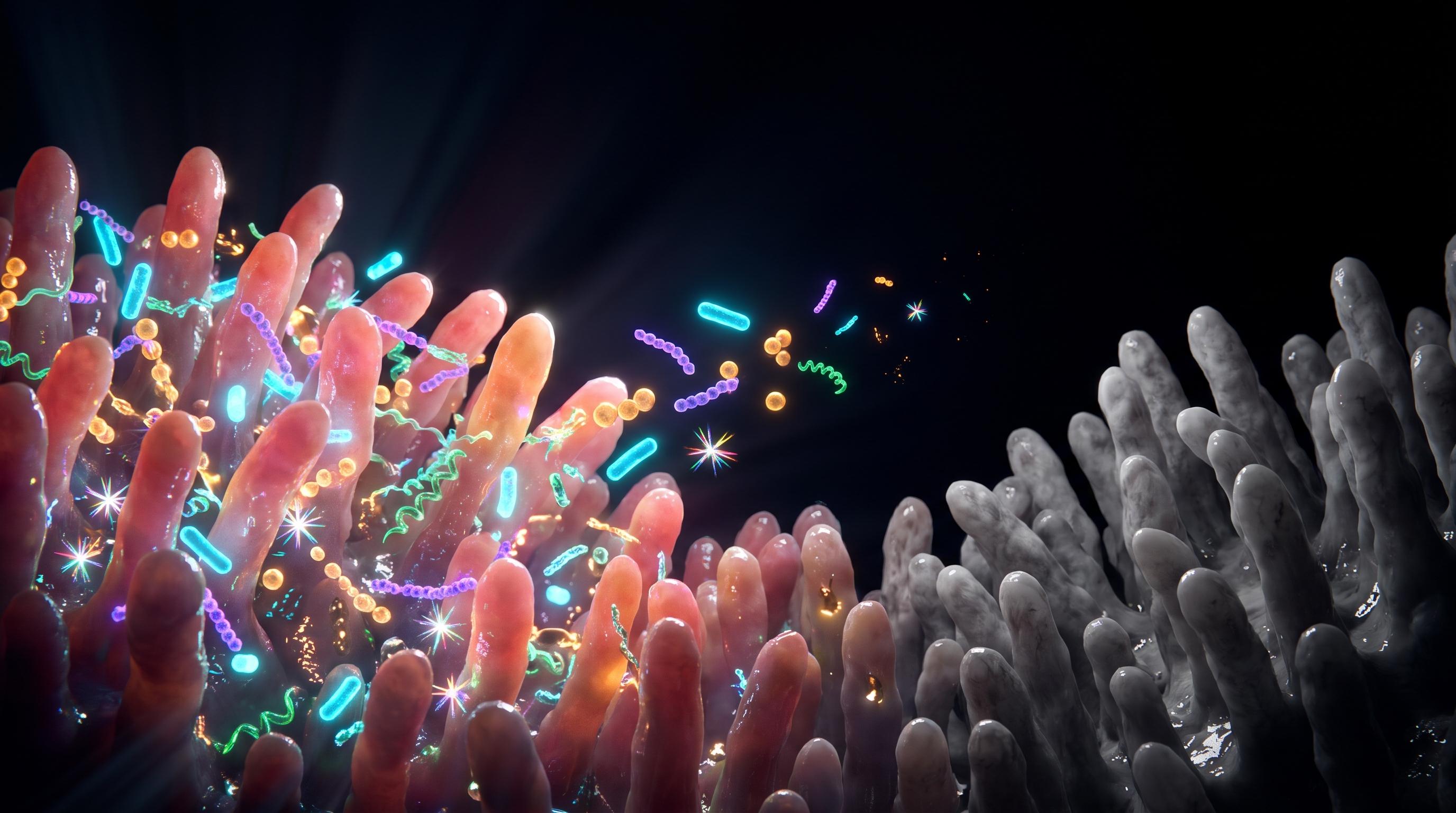
Have we found a cause for numerous intestinal problems?

How would you like to explore?
Learning pathsOverview
Hundreds of types of bacteria live in your intestines. The number of people who still live without supermarkets and antibiotics is around two and a half times as many. Many of these species have accompanied our ancestors since the Stone Age, and are now disappearing in industrialized countries. At the same time, more and more people are living there with chronic intestinal inflammation. Is that related? And can what was lost be brought back?
Two traditional peoples on different continents, the Tsimane of Bolivia and the Hadza of Tanzania, share over 1,200 species of bacteria in the gut. Six out of ten of these species have become rare or are completely missing in industrialized countries. Genetic analyzes show that many of them migrated from Africa with humans. At the same time that this diversity is dwindling, the number of people with inflammatory bowel disease is increasing. It has not been proven that one causes the other. It's a plausible hypothesis, and there are many other risk factors. According to current knowledge, probiotics from the capsule do not bring back the lost diversity, but can protect against diarrhea when taking antibiotics. In a small study, however, when healthy people ate lots of fermented foods, diversity increased and at the same time inflammation levels in the blood decreased. What this means for health is still unclear.
Two peoples, one common heritage
The Tsimane live in the Amazon region of Bolivia. They live from gardening and what the forest provides. Their villages are located along a river and in a nearby forest area. The Hadza live on another continent, at Lake Eyasi in Tanzania. They are among the last peoples in Africa who still live as hunters and gatherers. They move their camp every few months, drink from springs and streams and eat what the savannah provides: tubers, berries, honey and hunted animals.
The ancestors of these two peoples separated tens of thousands of years ago. They have never had direct contact since then. Nevertheless, researchers at Stanford University have found an amazing commonality, and it's in the gut.
For a study published in the journal Nature in 2026, the team sequenced 133 stool samples from 85 adult Tsimane extremely deeply. This means that the researchers read out the entire genome in these samples and used it to assemble the genomes of the individual microbes. They compared these genomes with an equally deeply sequenced collection of 137 Hadza.
The result: 87.4 percent of the bacterial species found among the Tsimane were also found among the Hadza. That's 1,231 species. Two peoples who have never met each other carry the same intestinal flora over long distances.
And then comes the part that directly affects you. The researchers compared these common species with data sets from industrialized countries. 60.2 percent of them, i.e. 848 species, are rare or completely missing there. Six out of ten bacterial species that two independent traditional peoples have in common have become rare or disappeared here.
What is important is what this number means and what it does not mean. It doesn't mean that each of us is missing 60 percent of our intestinal bacteria. It means: A large proportion of the species that are apparently part of the basic equipment of traditionally living people can hardly be found in the industrialized world anymore.
Bacteria that came with us from Africa
How can two peoples on different continents have the same bacteria? One possibility is that these microbes are simply everywhere in the environment and everyone catches them from somewhere. The other possibility is more exciting: The bacteria could have been passed from person to person for thousands of years and accompanied our ancestors on their migration around the world.
To distinguish between them, the researchers used a trick from population genetics. When two groups of a bacterial species are separated from each other for a long time, they independently accumulate small changes in their genome. The longer the separation, the greater the differences. Like a clock, you can tell when the separation began.
Data for this analysis were sufficient for 636 of the common species. The pattern is consistent with human and microbe migration. The researchers estimate the beginning of the separation between the bacteria of the Tsimane and those of the Hadza to be around 17,000 years on average. This roughly lies in the time window between the exodus of humans from Africa around 60,000 to 70,000 years ago and the settlement of America around 16,000 to 23,000 years ago. For comparison: between Europe and North America the corresponding value is only around 1,100 years. Presumably, people in industrial societies constantly exchange their bacteria with each other, so that the clock is constantly being reset for them.
The estimate is based on a molecular clock and is therefore uncertain. Nevertheless, the message is clear: many of these bacteria are not accidental guests. They are roommates who have apparently accompanied humans since the Stone Age. And that's exactly what they're disappearing right now.
The authors conclude their summary with a sentence worth remembering. Many of these species are disappearing from industrialized populations, and the consequences for human health are uncertain.
730 against 277
The same working group had already published a study in the journal Cell in 2023 that made the extent of the loss tangible. At that time, the researchers sequenced 351 Hadza stool samples more deeply than ever before. For comparison, they examined samples from Nepal and California, using the same depth and the same method.
It is not easy to count how many species a person carries in their intestines. The deeper you sequence, the more rare species emerge. The researchers therefore used a statistical model to extrapolate the number at which the curve flattens as one searches deeper and deeper. The result: An average adult Hadza has around 730 species of bacteria in its intestines. An average adult Californian is around 277. That's around 62 percent less.
A restriction also applies here. The numbers are estimates from a model, not counted species, and the California comparison group was small. But the difference is so big that it can hardly be a measurement error.
A particularly clear example are the spirochetes. This is a group of screw-shaped bacteria that is part of the Hadza's permanent inventory. The more industrialized a population is, the rarer they become. The researchers did not find a single spirochete genome in the Californian samples. In total, they identified 124 species that are disappearing with industrialized lifestyles. They gave them a fitting name: VANISH taxa, after the English word for disappearing.
Why diversity is dwindling
What is stealing these bacteria from us? The researchers name five suspects, and they expressly emphasize that they are hypotheses. Firstly, highly processed foods. Second, common antibiotics. Third, birth by cesarean section, in which a baby does not pass through the birth canal. Fourthly, a low-germ, sanitarily clean living environment. And fifthly, little contact with animals and earth. All of this is missing from the lives of the Hadza and Tsimane, and all of this shapes our lives.
A study from 2018 shows most clearly that lifestyle actually changes the intestinal flora, and not genes. A team led by Pajau Vangay from the University of Minnesota studied Hmong and Karen, two ethnic groups from Southeast Asia. A total of 514 people took part, some still living in Thailand and others who had emigrated to the United States, including first and second generation immigrants. The researchers were even able to take samples from 19 Karen before and after the move.
The result was clear. With immigration to the USA, the diversity of the intestinal flora immediately declined. American bacterial strains replaced those they brought with them. And the effect became stronger with each passing year in the U.S., becoming more pronounced in those who were overweight, and further amplified across generations. The Stanford group sees this as evidence that lifestyle plays a causal role in the composition of the intestinal flora.
However, this only shows what changes the flora. Whether the changed flora makes us sick is a completely different question.
Which is actually increasing
Before looking for a reason, it must be clear what is actually increasing. And it's worth taking a closer look, because "intestinal problems" is a broad field.
There is good evidence of an increase in chronic inflammatory bowel disease, or IBD for short. These primarily include Crohn's disease and ulcerative colitis. In both cases, the intestines are chronically inflamed, and the disease accompanies those affected throughout their lives.
A large review article in the journal The Lancet in 2017 compiled data from 147 population studies. The highest numbers of sick people were found in Europe and North America. The highest reported value for Crohn's disease was in Germany with 322 patients per 100,000 inhabitants. In North America, Oceania and many European countries, more than 0.3 percent of the population now lives with IBD, i.e. more than one in 330 people. According to the large Global Burden of Disease study in 2017, there were around 6.8 million people worldwide.
But there is a catch here that you need to be aware of. In Europe and North America, the number of new cases is hardly increasing. In 16 of 22 studies on Crohn's disease and in 15 of 18 studies on ulcerative colitis it was stable or even declining. What is still increasing is the number of people living with the disease. Because the disease is chronic, new cases are added every year, while existing ones remain. Experts call this stage “compounding prevalence”, a piling up of disease burden.
An evaluation of 522 population studies from over a century, published in Nature in 2025, paints the picture even more precisely. After the Second World War, new cases rose rapidly in early industrialized countries. At the turn of the millennium, they stabilized in many places, with one important exception: they continued to rise among children. The number of those affected, however, is increasing in all age groups. In Lothian, Scotland, for example, their proportion rose from 0.57 to 0.78 percent of the population between 2008 and 2018. Forecasts from Canada and Scotland expect one percent for 2030. For Denmark, assuming new cases remain the same, the researchers calculate an increase from 0.86 percent in 2014 to 1.19 percent in 2025 and 1.44 percent in 2035. The Canadian epidemiologist Gilaad Kaplan expects that in the early industrialized countries more than one in 100 people will be living with IBD within the next decade.
On the other hand, there is a steep increase in new cases in countries that are currently industrializing. In Brazil, since 1990, they have increased by a good 11 percent per year for Crohn's disease and by almost 15 percent for ulcerative colitis. Part of this can be explained by the fact that the diseases are simply recognized more frequently there today. However, the authors of the Nature paper assume that there is also a real increase behind it, driven by environmental factors.
And the other intestinal problems?
When most people talk about intestinal problems, they don't mean Crohn's disease. You mean flatulence, a stomach that rumbles after eating, changing bowel movements, irritable bowel syndrome. These so-called functional intestinal problems are extremely common. In the world's largest survey, with 73,076 adults from 33 countries, 40.3 percent of those surveyed online met the criteria for at least one such disorder. In personal interviews it was 20.7 percent. Depending on the type of survey, this affects between one in five and two in five adults.
Whether these complaints are increasing is another question. No reliable evidence of this was found in this research. The big survey is a snapshot, not a progression over time. So when there is talk of “more and more intestinal problems”, then this is covered by figures, especially for chronic intestinal inflammation.
The suspicion
Now to the actual question. The diversity in the intestines is shrinking with industrialization. Chronic intestinal inflammation is increasing with industrialization. Is one the reason for the other?
The idea is obvious, and the researchers formulate it themselves. The Stanford group writes that chronic diseases, driven primarily by persistent inflammation, are increasing rapidly with industrialization. And that, at the same time, the changes in the intestinal flora are also well documented. Two curves that go up and down at the same time. This is the status.
In the discussion of their Nature paper from 2026, Carter and colleagues are becoming a little bolder. The loss of VANISH species, they write, is linked to an increased risk of several chronic metabolic and inflammatory diseases. This opens up the possibility that a reintroduction of these species could bring back microbial functions that co-evolved with humans. Linked here means: There is a connection. It doesn't say that the loss is the cause. And reintroduction is a possibility, not an outcome.
Perhaps the best summary of the state of knowledge can be found in the major Nature paper from 2025 on the spread of chronic intestinal inflammation. The reasons for the increase are not fully understood, the authors write. However, the data suggests that environmental factors from the Western lifestyle have made a significant contribution, including more smoking, a Western diet and better hygiene. They could change how the intestinal mucosal immune system responds to intestinal bacteria in people who are genetically susceptible to them.
There are three things in this one sentence. The intestinal bacteria are involved. The environment is involved. And genes are involved. None of these alone explain the disease.
chicken or egg
Even if people with chronic intestinal inflammation have different intestinal flora, one question remains: What came first? Did the changed flora trigger the inflammation, or did the inflammation change the flora?
A systematic review evaluated 48 studies that compared the intestinal flora of IBD patients with that of healthy people. The result is sobering. The diversity was either lower or no different among those who were sick than among those who were healthy. Some bacteria were more common, others less common. But the results and methods of the studies contradicted each other so much that the authors were unable to draw any conclusions.
Carter and colleagues also think it is possible that the arrow points in the other direction. The typical bacteria in industrialized intestines carry a striking number of genes with which they protect themselves against oxidative stress. Oxidative stress arises, among other things, from inflammation. According to the researchers' interpretation, these bacteria may have adapted to an inflamed intestine. Then some of the changed flora would be a consequence rather than a cause. This is also an interpretation and not a proof.
One of many suspects
There is a clear answer to the question of whether loss of diversity is “the reason” for increasing intestinal inflammation: it is not the only one. At best he is one of many.
A so-called umbrella review, i.e. an overview of many meta-analyses, has brought together all of the risk factors for inflammatory bowel disease that have been examined so far. There were 191. A statistical connection with the disease was found for 92 of these, 62 increased the risk and 30 reduced it. The ten strongest risk factors include infections with cytomegalovirus and Campylobacter bacteria, family history of IBD, periodontitis, psoriasis, taking acid blockers and a Western diet. Most of the factors were related to previous illnesses, personal lifestyle and the environment.
These are also connections from observational studies, not proven causes. But they show how many strings are pulling on this disease. The lost gut bacteria are a thread, probably an important one. They are not the only ones.
The variety from the capsule?
If we lack bacteria, a solution seems obvious: just swallow them. Probiotics, i.e. preparations with live bacteria, are sold for exactly this, especially after a course of antibiotics that disrupt the intestinal flora. But a study from Israel made headlines in 2018 because it suggested exactly the opposite.
At that time, Eran Elinav's group at the Weizmann Institute published two papers in Cell. In the first, healthy volunteers were given a preparation containing eleven bacterial strains from four common probiotic families, without prior antibiotics. Ten took the probiotic, five took a dummy supplement. The researchers not only looked into the stool, but also directly at the intestinal mucosa, using gastroscopy and colonoscopy. This showed that whether the probiotics settled on the mucous membrane varied completely from person to person. In some people, the existing intestinal flora literally repelled the newcomers. And you couldn't tell from the chair.
In the second study, led by Jotham Suez, 21 healthy volunteers were initially given a broad-spectrum antibiotic for a week. They were then distributed randomly into three groups. Seven simply waited to see whether their intestinal flora recovered on its own. Eight took the same probiotic with 11 strains for four weeks. And six received their own intestinal flora back, which had been collected before the course of antibiotics, as a so-called autologous fecal transplant.
The result was surprising. After the course of antibiotics, the probiotic bacteria colonized well on the intestinal mucosa, much better than without antibiotics. But that was exactly what slowed the return of the body's own flora. Compared to the group that just waited, the intestinal flora and gene activity of the intestinal mucosa recovered significantly delayed in those who swallowed probiotics and remained persistently incomplete. The patient's own stool sample, on the other hand, almost completely restored the original state within days. In the laboratory it was shown that substances that Lactobacillus bacteria excrete inhibit the growth of the other flora. The authors summarized it this way: Probiotics interfere with recovery from antibiotics rather than helping it.
Why this study should not be overextended
As spectacular as that sounds, the study has narrow limitations. There were eight people in the probiotic group. A single preparation was tested and, according to current knowledge, probiotics have a strain-specific effect. Each strain must be tested individually; a result for one product does not automatically apply to others. The probiotic also only came after the course of antibiotics, whereas in studies and practice it is usually given at the same time. What was measured was whether the flora returned to its original state, not whether someone developed diarrhea or other complaints. And the participants were healthy people without infection who received a strong antibiotic combination. These points were particularly pointed out by an international professional association for probiotic research, whose interests should be taken into account. The points of criticism themselves can be understood from the study data.
A small study with a preparation is just a study. That's why it's worth taking a look at the larger overviews.
What the big overviews say
There are two systematic reviews on the question of whether probiotics change the diversity in the intestine. Both only half support the Israeli study.
In 2016, a working group from Copenhagen evaluated seven randomized studies on healthy adults who received probiotics without antibiotics. In not a single study did the probiotic change the diversity of the intestinal flora compared to a dummy preparation. The authors speak of a lack of evidence that probiotics actually influence the composition of the stool flora in healthy people.
In 2023, a working group at Semmelweis University in Budapest looked at exactly the situation that is at stake after a course of antibiotics: probiotics during treatment. Of over 11,000 works viewed, 15 met the criteria, five of which could be evaluated together. The result: No difference in diversity between people with and without probiotics. In both groups the composition returned to its original state after three to eight weeks. The title of the work is correspondingly clear: probiotics during antibiotic treatment are not justified in order to maintain diversity. However, the authors themselves mention the weakness of their work: few and small studies.
The bottom line is that, according to these reviews, probiotics do not impair diversity. But they don't improve them either.
The opposing side
Are there works that show the opposite? Yes, on two levels.
At the level of intestinal flora, there are individual randomized studies in which certain preparations improved recovery after antibiotics. In an American study from 2021, 42 healthy people were given a yogurt containing the Bifidobacterium strain BB-12 during a course of antibiotics, and 20 others were given a control yogurt. In the control group, the diversity fell more sharply and for a longer period of time, and an important metabolite of intestinal bacteria, acetic acid, only recovered in the group with BB-12. A study with a fermented milk product from the Danone company found a significant but modest improvement in recovery in 2022, and employees of the manufacturer worked on it. And in 2026, a study by Seed Health reported on a probiotic and pomegranate extract preparation given from the first day of an antibiotic course, using the same antibiotic combination as in the Israeli study. There, diversity, metabolic products and the intestinal barrier recovered better than with a dummy preparation. This is a manufacturer study and the number of participants is not even in the summary.
At the level of complaints, the data situation for probiotics is actually the best. The 2025 Cochrane review, one of the most rigorous forms of evidence assessment, evaluated 47 studies with over 15,000 participants. Those who took probiotics as part of their antibiotic treatment were less likely to have diarrhea: 23 instead of 27.4 percent. And diarrhea caused by Clostridioides difficile, a germ that can spread in the intestine after antibiotics, is less common: 1.6 instead of 3.2 percent. For every 65 people who take probiotics, one such case is calculated to be prevented. However, the authors rate the evidence as low, and 28 of the studies found links to probiotic companies.
An umbrella review from 2026 of 21 reviews with 170 individual studies confirms protection against diarrhea. However, there was no clear benefit seen in older people. And the authors expressly warn: their results do not show that any particular product works and are not suitable for advertising promises. Even the Budapest working group, which does not consider probiotics to be justified for diversity, considers certain strains to be useful in preventing diarrhea and certain intestinal infections on antibiotics in people at risk.
Two questions, two answers
So who is right? Both sides because they answer different questions.
The first question is: Do probiotics bring back the lost diversity? According to current knowledge, it cannot be detected, neither in healthy people nor during a course of antibiotics. A single small study with a single preparation even shows delayed recovery. A few other studies, some of which were carried out by manufacturers, show a slightly accelerated rate.
The second question is: Do probiotics protect against diarrhea with antibiotics? Probably a little, with low evidence and depending on the strain.
And then there is another point that affects the whole topic. It has not yet been clarified which complaints belong to which diversity values. More diversity is a measurement. It is not a health promise.
Yogurt, kimchi, kombucha
If the capsule doesn't bring back diversity, what will? A study from the same Stanford group that studied the Hadza provides a clue. It was published in Cell in 2021.
36 healthy adults, on average 51 years old and mostly women, were randomly assigned to two diets. One group should eat significantly more fiber. The other person should eat significantly more fermented foods, i.e. foods that are made with the help of bacteria or yeast. The study ran over 17 weeks: three weeks of baseline measurement, four weeks of slow increase, six weeks with a high amount and finally four weeks in which everyone was allowed to decide for themselves how much of it they would continue to eat.
The fermentation group increased their consumption from an average of 0.4 to 6.3 servings per day. The menu included yogurt, kefir, fermented cottage cheese, kombucha, vegetable brine drinks and fermented vegetables like kimchi.
The result: In the fermentation group, the diversity of intestinal flora increased steadily. And it remained elevated in the final phase, when the participants again ate less fermented foods. The researchers interpret this to mean that the ecosystem in the intestine has been restructured and does not simply reflect what is currently being eaten.
At the same time, 19 of 93 inflammatory substances measured decreased in the blood, including interleukin-6. This messenger substance is considered a central mediator of chronic inflammation and is increased, for example, in rheumatoid arthritis, type 2 diabetes and chronic stress. Neither of these things happened in the fiber group. Their diversity remained stable and none of the 19 inflammatory substances changed. The fiber changed which tools the bacteria had for breaking down plant fibers, but not how many different species lived in the intestines.
Where the new bacteria came from
The most surprising observation of the study concerns the origin of the new bacteria. It would be obvious that they come directly from the yogurt or kimchi. But only a small proportion of the newly emerged species were found in the food itself. The largest overlap was 5.4 percent, early in the study.
The researchers conclude that the increase in diversity is not primarily due to the microbes consumed. Rather, the fermented foods seem to remodel the existing intestinal community or pave the way for newcomers from the surrounding area. The data cannot be used to distinguish whether the “new” species were really new or were just so rare that they were below the detection limit.
This ties in with the rest of the story in an interesting way. Two of the studies in which the intestinal flora recovered better after antibiotics also tested fermented milk products: the yogurt with BB-12 and the Danone product. A 2024 systematic review of fermented milk products in people with intestinal diseases or intestinal problems, with 15 human studies and 1,550 participants, found more bacterial diversity in six studies. In 14 studies, the symptoms decreased, although these were mostly assessed by the participants themselves. However, a review from 2025 puts the brakes on things: Overall, the evidence for fermented foods is still inconsistent, probably also because people react very differently to them.
What the study doesn't show
As promising as the results sound, the study has clear limitations, and the authors themselves identify them. With 18 people per group it is small. There was no real control group that continued to eat normally. Only the two nutritional groups were compared with each other and each person with themselves. The actual costume change only lasted ten weeks, but how permanent the changes are remains to be seen.
Particularly important: The study's predetermined main goal, a measure of how immune cells react to messenger substances, did not change in either group. The reduced inflammation levels are therefore a secondary finding. And the participants were healthy. People with chronic inflammatory bowel disease or moderate to severe irritable bowel syndrome were not allowed to take part. The study does not say whether fermented foods help people with intestinal diseases.
A practical detail: In the fermentation group, flatulence temporarily increased during the increase phase, even though the amount was increased slowly. At the end of the high quantity phase the difference disappeared again.
The Stanford researchers themselves formulate their conclusion cautiously. Fermented foods could be valuable in counteracting the reduced diversity and increased inflammation levels in industrialized societies. Could. This is an educated guess and not proof of effectiveness.
What remains
If you put all the puzzle pieces together, you get a picture with clear contours and open edges.
One thing is certain: the intestinal flora of people in industrialized countries is much poorer than that of people who live traditionally. A large proportion of the species that have apparently accompanied humans since the Stone Age have become rare or disappeared here. And lifestyle plays a causal role, as the immigrant study shows.
One thing is also certain: In industrialized countries, more and more people are living with chronic inflammatory bowel disease, and in countries that are currently industrializing, the number of new cases is rising sharply.
It has not been proven that one causes the other. It is a plausible hypothesis that fits well with knowledge about the interaction between gut bacteria, the immune system, the environment and genes. But there are many other risk factors, and whether the changed flora is the cause or consequence of the inflammation remains an open question.
For you this means: Based on current knowledge, the diversity in your intestines cannot simply be replenished from one capsule. Probiotics have their place when it comes to preventing diarrhea while taking antibiotics. They have not yet proven themselves as a source of diversity. The most promising clue comes from the kitchen: in a small study, fermented foods increased diversity and reduced inflammation levels, apparently not because their bacteria colonize in the intestines, but because they change the ecosystem there. Nobody knows whether this protects against disease.
Maybe that's the real point of this story. The bacteria we are missing migrated with our ancestors on foot from Africa to South America. We lost them in a few generations. We won't get them back with a powder from the pharmacy. A glass of kefir, a bit of sauerkraut and a portion of kimchi is a start on which science has not yet spoken the last word.
Sources
Carter MM, Liu Z, Olm MR et al. (2026). Prehistoric global migration of vanishing gut microbes with humans. Nature 658(8137): 1008–1014. https://doi.org/10.1038/s41586-026-11106-1
Carter MM, Olm MR, Merrill BD et al. (2023). Ultra-deep sequencing of Hadza hunter-gatherers recovers vanishing gut microbes. Cell 186(14): 3111–3124.e13. https://doi.org/10.1016/j.cell.2023.05.046
Vangay P, Johnson AJ, Ward TL et al. (2018). US immigration westernizes the human gut microbiome. Cell 175(4): 962–972.e10. https://doi.org/10.1016/j.cell.2018.10.029
Ng SC, Shi HY, Hamidi N et al. (2017). Worldwide incidence and prevalence of inflammatory bowel disease in the 21st century: a systematic review of population-based studies. The Lancet 390(10114): 2769–2778. https://doi.org/10.1016/S0140-6736(17)32448-0
GBD 2017 Inflammatory Bowel Disease Collaborators (2019). The global, regional, and national burden of inflammatory bowel disease in 195 countries and territories, 1990–2017. Lancet Gastroenterology & Hepatology 5(1): 17–30. https://doi.org/10.1016/S2468-1253(19)30333-4
Hracs L, Windsor JW, Gorospe J et al. (2025). Global evolution of inflammatory bowel disease across epidemiologic stages. Nature 642(8067): 458–466. https://doi.org/10.1038/s41586-025-08940-0
Kaplan GG (2025). The global burden of inflammatory bowel disease: from 2025 to 2045. Nature Reviews Gastroenterology & Hepatology 22(10): 708–720. https://doi.org/10.1038/s41575-025-01097-1
Sperber AD, Bangdiwala SI, Drossman DA et al. (2020). Worldwide prevalence and burden of functional gastrointestinal disorders, results of Rome Foundation Global Study. Gastroenterology 160(1): 99–114.e3. https://doi.org/10.1053/j.gastro.2020.04.014
Wastyk HC, Fragiadakis GK, Perelman D et al. (2021). Gut-microbiota-targeted diets modulate human immune status. Cell 184(16): 4137–4153.e14. https://doi.org/10.1016/j.cell.2021.06.019
Pittayanon R, Lau JT, Leontiadis GI et al. (2019). Differences in gut microbiota in patients with vs without inflammatory bowel diseases: a systematic review. Gastroenterology 158(4): 930–946.e1. https://doi.org/10.1053/j.gastro.2019.11.294
Wu T, Cheng H, Zhuang J et al. (2025). Risk factors for inflammatory bowel disease: an umbrella review. Frontiers in Cellular and Infection Microbiology 14: 1410506. https://doi.org/10.3389/fcimb.2024.1410506
Zmora N, Zilberman-Schapira G, Suez J et al. (2018). Personalized gut mucosal colonization resistance to empiric probiotics is associated with unique host and microbiome features. Cell 174(6): 1388–1405.e21. https://doi.org/10.1016/j.cell.2018.08.041
Suez J, Zmora N, Zilberman-Schapira G et al. (2018). Post-antibiotic gut mucosal microbiome reconstitution is impaired by probiotics and improved by autologous FMT. Cell 174(6): 1406–1423.e16. https://doi.org/10.1016/j.cell.2018.08.047
Suez J, Zmora N, Elinav E (2019). Probiotics in the next-generation sequencing era. Gut Microbes 11(1): 77–93. https://doi.org/10.1080/19490976.2019.1586039
Szajewska H, Kołodziej M, Zalewski BM et al. (2026). Systematic review: Limosilactobacillus reuteri DSM 17938 for preventing antibiotic-associated diarrhoea in children. Journal of Pediatric Gastroenterology and Nutrition 82(3): 781–789. https://doi.org/10.1002/jpn3.70320
Kristensen NB, Bryrup T, Allin KH et al. (2016). Alterations in fecal microbiota composition by probiotic supplementation in healthy adults: a systematic review of randomized controlled trials. Genome Medicine 8(1): 52. https://doi.org/10.1186/s13073-016-0300-5
Élias AJ, Barna V, Patoni C et al. (2023). Probiotic supplementation during antibiotic treatment is unjustified in maintaining the gut microbiome diversity: a systematic review and meta-analysis. BMC Medicine 21(1): 262. https://doi.org/10.1186/s12916-023-02961-0
Merenstein D, Fraser CM, Roberts RF et al. (2021). Bifidobacterium animalis subsp. lactis BB-12 protects against antibiotic-induced functional and compositional changes in human fecal microbiome. Nutrients 13(8): 2814. https://doi.org/10.3390/nu13082814
FitzGerald J, Patel S, Eckenberger J, et al. (2022). Improved gut microbiome recovery following drug therapy is linked to abundance and replication of probiotic strains. Gut Microbes 14(1): 2094664. https://doi.org/10.1080/19490976.2022.2094664
Napier BA, Allegretti JR, Feuerstadt P et al. (2026). Multi-species synbiotic supplementation after antibiotics promotes recovery of microbial diversity and function, and increases gut barrier integrity: a randomized, placebo-controlled trial. Antibiotics (Basel) 15(2): 138. https://doi.org/10.3390/antibiotics15020138
Esmaeilinezhad Z, Ghosh NR, Walsh CM et al. (2025). Probiotics for the prevention of Clostridioides difficile-associated diarrhea in adults and children. Cochrane Database of Systematic Reviews 9(9): CD006095. https://doi.org/10.1002/14651858.CD006095.pub5
Xi F, Xu C, Li P et al. (2026). Probiotics for the prevention of antibiotic-associated diarrhea: an umbrella review and second-order meta-analysis of 21 systematic reviews covering 170 unique randomized controlled trials. Frontiers in Nutrition 13: 1994645. https://doi.org/10.3389/fnut.2026.1994645
Ní Chonnacháin C, Feeney EL, Gollogly C et al. (2024). The effects of dairy on the gut microbiome and symptoms in gastrointestinal disease cohorts: a systematic review. Gut Microbiome (Cambridge) 5: e5. https://doi.org/10.1017/gmb.2024.2
Humblot C, Alvanoudi P, Alves E et al. (2025). A scoping review of the health effects of fermented foods in specific human populations and their potential role in precision nutrition. Frontiers in Nutrition 12: 1650633. https://doi.org/10.3389/fnut.2025.1650633
In addition to the Israeli study: The Scientist (2018), “Probiotics’ effects on the microbiome vary widely”; Press release from the Weizmann Institute (2018), “An inside look at probiotics”; Statement from the International Scientific Association for Probiotics and Prebiotics, isappscience.org/?p=521
Your free account
Save interesting articles, track your reading progress and connect with other readers. Joining Pandragora is free.
Discover more with Premium
Start a subscription to get unlimited access to all articles.
Share or save this article
Share this post or save it for later. A like helps make relevant content more visible.
We place great emphasis on accuracy in our research. Nevertheless, errors can occur. We also recommend reading the corresponding primary literature listed in the sources. The content on Pandragora is for general information only and does not replace professional medical advice or treatment. Use of the information provided is expressly at your own risk and responsibility; any liability is excluded.