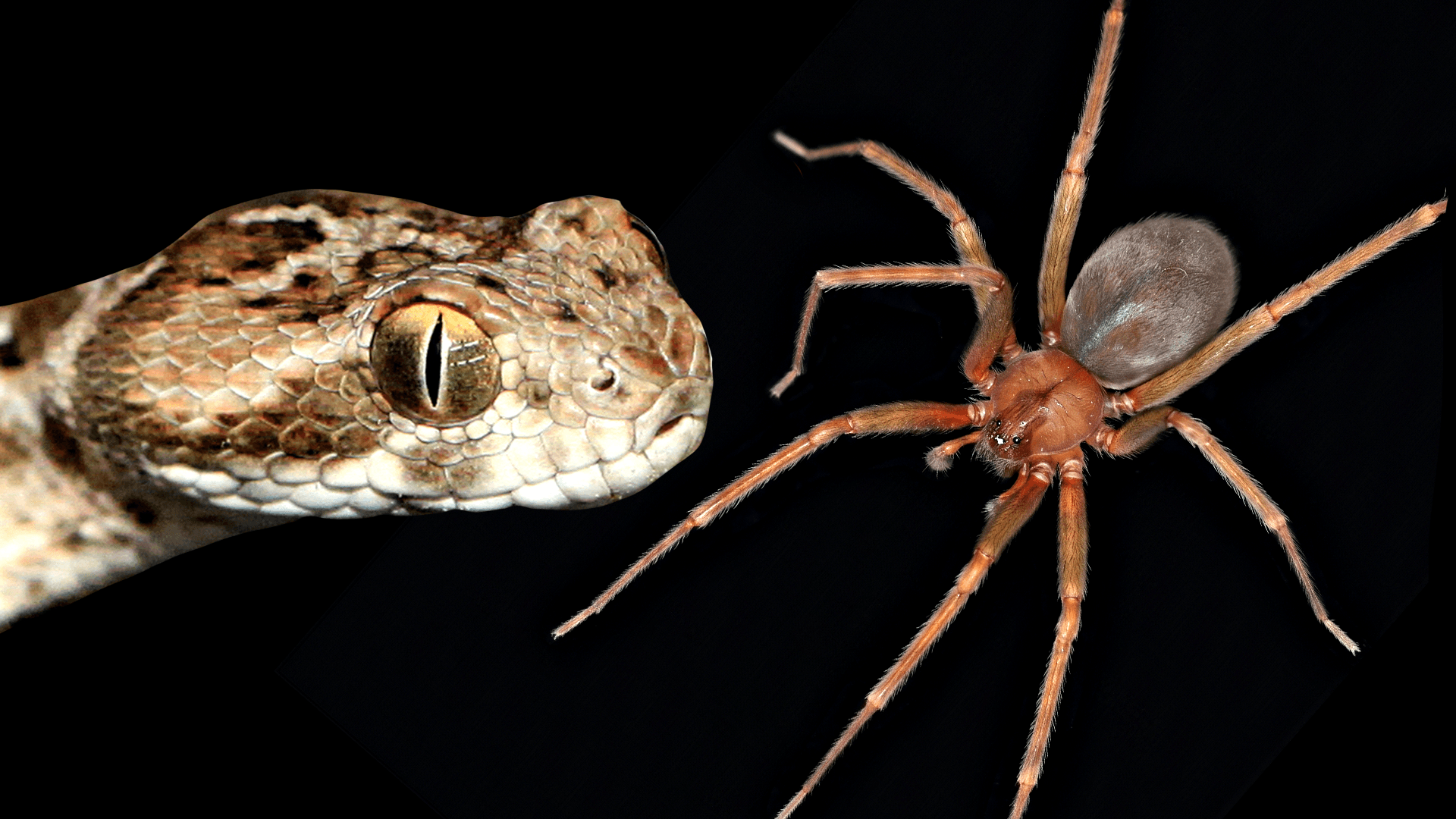
Deadly alliance: Could spider and snake venom team up against tumor cells?
The venoms of spiders and snakes are actually designed to kill prey or ward off enemies. But hidden within their deadly components is an unexpected potential. The venom of a certain species of spider can, paradoxically, massively disrupt the growth of tumor cells - but it has a crucial catch: it also attacks healthy blood platelets in an uncontrolled manner. In order to tame and specifically control this destructive force, an unusual partner is required: the viper. If specific proteins from both animals are merged into a single molecule, a completely new biological structure is created. Here you will discover why this uncanny combination of all things could suddenly act like a precise tool on melanoma cells and what unexpected effects it has.

Your free account
Save interesting articles, track your reading progress and connect with other readers. Joining Pandragora is free.
Discover more with Premium
Start a subscription to get unlimited access to all articles.
Researchers have combined the venoms of a spider and a snake to develop a new weapon against cancer. Here you will learn how a phospholipase D from the Loxosceles spider was fused with a disintegrin from a snake to form a hybrid molecule called rechistatin. While the spider venom portion produces substances that can kill tumor cells, the snake venom portion serves as a precise guidance system directly to the cancer cells. In tests with black skin cancer, this combination poison showed a significantly stronger effect than the individual substances alone. At the same time, the snake component prevents the dangerous clumping of blood platelets that the spider venom would normally trigger. This approach opens up a promising strategy for using highly active natural toxins more specifically for cancer therapy.
An unusual alliance from the animal kingdom
Imagine that over millions of years, nature has forged the perfect keys for life's most complex locks. The venoms of snakes, spiders, wasps and scorpions are small molecular precision tools that have evolved to interfere with an organism's vital processes with frightening precision. But this is exactly where one of the greatest mysteries of modern medicine lies: How do you turn a deadly substance into a cure?
Although these toxins are used in nature to overwhelm prey or ward off enemies, they have properties that make them very interesting for the development of new drugs. They often act as highly specific blood thinners, painkillers or as potential active ingredients against cancer. However, the central problem with the use of these “biological weapons” is their lack of selective power. Laboratory studies show that although many of these toxins are highly effective at eliminating cells, they lack the specificity necessary to distinguish between malignant tumor cells and healthy tissue.
Think of these highly active substances like an extremely skilled but blind craftsman. He has the perfect tool to solve a deep problem - like stopping a malignant growth. But without guidance, he doesn't know where in the body to start. It runs aimlessly through the bloodstream and inadvertently causes significant damage to the "walls" and "inventory" of your body in search of its target. In order for this blind specialist to become a therapeutic savior, he needs a navigation system - a molecular guide dog that will guide him unerringly to the right place of work.
Research is therefore looking for ways to tame and direct this toxic force. The basic idea is to construct a kind of “molecular taxi”. A highly effective toxin, such as a phospholipase D from the spider Loxosceles gaucho, is combined with a target-seeking molecule that acts like a navigation system. The goal is a technology that makes it possible to safely store the poison in the body's dense traffic until it detects exactly the antennae that are found almost exclusively on the surface of cancer cells.
Initial laboratory studies indicate that such a combination of a spider phospholipase and a snake disintegrin achieves synergistic effects and could open up new avenues in cancer therapy. The focus is particularly on black skin cancer, melanoma, because its cells have very specific surface structures that could serve as perfect “stops” for such a molecular taxi. But before such a hybrid toxin can be used safely, a fundamental problem must be solved: the strong clumping of blood platelets and the lack of selectivity of these special spider toxins.
The double-edged potential of spider toxins
In the world of hermit spiders, particularly in the species Loxosceles gaucho, evolution has produced a tool that is as fascinating as it is frightening: the enzyme phospholipase D, often called 'LgRec1' in research. You can imagine this enzyme as a highly specialized biochemical pair of scissors that attaches to the cell membrane – the protective “wallpaper” of your cells. But these scissors don't just cut holes randomly.
In cell cultures, it can be observed that LgRec1 specifically breaks down certain fats in the cell membrane, such as sphingomyelin or lysophosphatidylcholine. The exciting thing about it is the product of this cut: a biologically active signaling substance called cyclic phosphatidic acid (cPA) is created. This substance acts as a biologically active mediator in cellular signal transmission. Studies indicate that cPA plays a central role in signaling pathways that can inhibit the growth and spread of tumor cells. In these controlled environments, cyclic phosphatidic acid appears to be able to inhibit the uncontrolled growth of cancer cells, stop their spread (migration), and even prevent them from invading healthy tissue (invasion).
But what looks like a potential miracle cure for cancer in the petri dish shows a completely different, bleak face in the wild. When the venom of a Loxosceles spider enters the human circulatory system, the enzymatic activity causes severe clinical symptoms. Documented cases of poisoning show that these phospholipases are the main culprits for massive tissue damage. This leads to skin necrosis, in which the tissue around the bite dies, and hemolysis, the breakdown of red blood cells.
However, the effect on your blood is particularly dangerous: the enzyme triggers massive platelet aggregation. This causes the platelets to aggregate, which promotes undesirable clotting activity within the vessels. Laboratory studies also suggest that the poison can also cause serious damage to the kidneys (nephrotoxicity) and fuel inflammatory reactions. Spider venom is therefore a double-edged sword: although the enzyme enables the inhibition of tumor cells by producing cPA, its lack of selectivity represents a significant hurdle as it simultaneously damages healthy tissue and disrupts blood clotting. This lack of selectivity is medicine's biggest hurdle - and this is where a second, equally deadly specialist comes into play.
The Viper's precise navigation system
The sand rattle viper, one of the most dangerous snakes in the world, keeps a secret in its venom that seems to be tailor-made for the precise transport of active ingredients. While the spider phospholipase D acts like a powerful but disoriented pair of scissors, this snake - technically called Echis carinatus - produces tiny proteins that function completely differently: the so-called disintegrins. One toxin in particular stands out in this group: echistatin.
You can think of Echistatin as a highly specialized GPS tracker that has a perfectly shaped key at the end. This key only fits into very specific locks on the surface of cells, called integrins. These integrins are proteins that normally function like biological anchors. They help cells adhere to their surroundings or communicate with other cells. In healthy tissue, these proteins mediate the adhesion of cells to their surroundings, while in tumors they can promote the growth and migration of cancer cells. But this is exactly where cancer cells use an insidious trick.
Particularly aggressive tumor cells, such as those of mouse black skin cancer (melanoma cells of the B16F10 line), massively upgrade their surface with certain binding sites - especially with the integrin $\alpha v\beta3$. While healthy cells only have these “antennas” in moderate numbers, they are present in abundance on the surface of melanoma cells. For the snake's echistatin, this is like a brightly shining beacon in the darkness. Due to its chemical structure, echistatin has an extremely high affinity and specificity for exactly these receptors. It accurately recognizes these target structures and locks in there, allowing the toxic cargo to be navigated precisely to the tumor cell.
The fascinating thing about these disintegrins is their dual nature. On the one hand, they are non-toxic in themselves and have no enzymatic activity - so they do not directly destroy the cell membrane, as spider scissors do. On the other hand, however, they are the perfect counterpart to the most dangerous side effects of spider venom. As you already know, the spider's phospholipase D causes platelets to clump massively. However, the laboratory shows that echistatin is a potent inhibitor of precisely this platelet aggregation.
By blocking the receptors on the blood platelets, the snake venom prevents them from networking and forming dangerous clots. Echistatin is therefore much more than just a means of transport; it also acts as a biological safety buffer. It's like giving a capable but unpredictable expert a level-headed assistant who not only shows the way to the goal, but also makes sure that the expert doesn't cause chaos along the way. This lays the theoretical foundation for an alliance that was never intended in nature: the cell-destroying effect of the spider venom is channeled through the snake's accuracy in order to specifically target cancer cells, while at the same time damaging effects on blood clotting are suppressed.
Rechistatin and the creation of a molecular chimera
Combining these two opposing forces into a single molecule requires more than just a chemical mixture – it requires precise genetic engineering. The solution lies in the creation of a so-called fusion protein, a molecular chimera that would never arise on its own in nature. To achieve this, researchers have combined the blueprint for the spider venom enzyme LgRec1 and the snake venom protein echistatin and created a completely new hybrid toxin: rechistatin.
In order for this artificial protein to exist at all, a high-performance biological printer is needed. In this case, genetically modified bacteria of type E are used. coli (strain BL21) as a factory. Inside, the genetic instructions of both animals are read and linked into a single long chain of amino acids. In the laboratory, a remarkable yield of an average of 2 milligrams of the purified hybrid venom per liter of bacterial culture can be obtained.
However, the heart of this design is an inconspicuous detail: a molecular hinge. A flexible connector made of the amino acid glycine (the sequence GGGGS) was inserted between the spider's deadly scalpel and the snake's navigation system. You can think of it like a flexible safety line. Without this joint, the two protein parts could get in each other's way or lose their spatial structure. The result of this precise welding work is a molecule with a mass of exactly 38,471.8 Daltons - a heavyweight compared to its individual parts, which is essentially composed of the 32.36 kDa (kilodalton) spider phospholipase and the snake echistatin, which weighs just 5.37 kDa.
Whether this artificial combination works can be checked in the laboratory using a special method called circular dichroism. The molecule is illuminated with polarized light in order to analyze its spatial folding. The measurements showed that the recistatin maintains its correct three-dimensional shape. The spectrum of the hybrid closely resembles that of the original spider phospholipase, but shows a characteristic kink at a wavelength of around 195 nanometers that comes from the snake venom part. This means: The two poison components have not deformed each other, but rather exist stably next to each other.
But is the spider's scalpel still sharp enough after being "wired" to the snake drone? To clarify this, the enzymatic activity was examined in a biochemical experimental setup in a concentration range of 0.005 to 0.15 micromole (µM). These measurements confirmed that rechistatin still has the ability to effectively break down the lipid sphingomyelin. Although a slightly lower activity was observed at a concentration of 0.05 µM compared to the pure spider venom LgRec1, at the highest dose of 0.15 µM the hybrid's biochemical scissors were fully operational. This provided the first proof: the spider retained its striking power while it was now firmly coupled to the snake's navigation aid. The crucial question now was whether this alliance would remain stable even in the turbulent environment of human blood.
The peace treaty in the bloodstream
A potential conflict rages in the vessels of your body as soon as spider phospholipase enters the bloodstream. In laboratory experiments with human platelet-rich plasma, the full aggressiveness of this toxin can be seen: even at a low concentration of 0.08 micromoles (µM), the blood platelets, the thrombocytes, begin to network massively. This platelet aggregation is normally a vital process for closing wounds, but under the influence of spider venom this happens uncontrollably and dangerously. Here the therapeutic vision threatens to fail due to the body's own blood clotting - if it weren't for the peacemaker made from viper venom.
Echistatin, the snake venom component of rechistatin, acts like a tightly applied handbrake in this biochemical showdown. It blocks the $\alpha$IIb$\beta$3 integrins on the surface of blood platelets. These receptors are the crucial “docking sites” that platelets need to form a stable bridge between each other and form a clump. In laboratory studies with blood plasma, it can be observed that echistatin can suppress this clumping even when researchers artificially help with 10 µM adenosine diphosphate (ADP) - one of your body's strongest natural alarm signals for blood clotting.
The true genius of the alliance is revealed in the direct comparison of the different concentrations of the hybrid in the laboratory. At very low doses of 0.08 µM rechistatin, the snake portion is not yet sufficient to occupy all receptors; the spider gets the upper hand and continues to trigger a clump. But as soon as you gradually increase the dose to 0.16 µM and further to 0.32 µM, the balance shifts noticeably. The platelets remain increasingly isolated and the plasma remains liquid.
When the concentration finally reaches 0.64 µM, a decisive turning point occurs: the aggregation of the platelets is almost completely suppressed. At this point, the snake venom part has occupied so many integrin receptors that the coagulation-promoting effect of the spider phospholipase is literally ineffective. It's a fascinating biochemical stalemate: the snake neutralizes the spider's most dangerous side effect at the exact moment when the drug dose is high enough to be attractive for treatment. In the controlled environment of the laboratory, it was shown that the toxin could be tamed so that it could not cause significant blockages in the bloodstream. But this safety during transport is only one side of the coin - the actual mission is to now deliver this tamed poison accurately to the front of the tumor.
The target approach to the tissue
In order for recistatin to find its target in a complex biological environment, precise tuning of its molecular components is required. Laboratory studies show that this molecule acts like a specialized unit that recognizes the surfaces of the cell lines being examined according to a specific signal. This shows the impressive accuracy that was gained through the fusion with the snake venom.
In laboratory tests, the so-called in-cell ELISA procedures, it was examined whether the snake's molecular navigation system remains functional in combination with the spider phospholipase D. To test this, the researchers labeled the hybrid toxin with a tiny "flag," a poly-histidine tag, which they were later able to make visible in the dark using specific antibodies, like a flashlight. Two completely different cell types served as test objects: On the one hand, there were highly aggressive melanoma cells of the B16F10 line, which literally paved their surface with integrin antennae. On the other hand, healthy connective tissue cells, so-called fibroblasts of the L929 line, acted as representatives of normal body tissue because they have very few of these special anchor points.
The observations in the laboratory are clear: While the pure spider venom LgRec1 glides past the cells almost completely disorientated, the rechistatin locks onto the cancer cells with a precision that is in no way inferior to that of the pure snake venom echistatin. Even at a low concentration of just 1 micromole (µM), clear binding to the melanoma cells can be detected. As the dosage increases from 3 and 6 up to 9 µM, the intensity of this binding increases steadily. It is as if the molecule has a chemical magnet for the malignant cells, which pulls it inexorably to their membrane.
However, the crucial safety test was how the hybrid behaved compared to the healthy cells. This shows the enormous selectivity of the construction: in cell culture, recistatin largely ignores the innocent fibroblasts. Only at the extremely high concentrations of 6 and 9 µM could minimal, almost negligible binding be detected. This suggests that the hybrid toxin largely spares healthy tissue in a low dosage range, while it already shows significant binding to the tumor. The Viper's navigation aid did its job and delivered the dangerous spider cargo to exactly the right address. Now the all-important question arises: What does this unequal duo do once they are firmly anchored to the cell wall of the tumor?
Synergies on the cell surface
As soon as the recistatin has found and docked with its target cell in the laboratory experiment, the decisive moment begins: the molecular alliance unfolds its combined power. In cell cultures over a period of 16 hours, it was shown that this hybrid toxin at concentrations of 1 and 3 micromoles (µM) achieves an effect that significantly exceeds the effects of the isolated individual toxins. This is where the true strength of synergism becomes apparent – an interaction where one and one make more than two.
You can think of this process like a targeted attack on a fortress. The snake venom element, echistatin, acts as the one that literally pulls the rug out from under the tumor cell. By blocking the integrin anchors, the cell loses its grip on the environment and begins to detach. Normally a cell could survive this loss of traction for a while, but that's exactly when the spider component strikes. Since recistatin is firmly anchored to the cell surface, the spider's enzymatic “scissors” are within direct striking distance of the cell membrane. It immediately begins to break down the vital fats in the casing. In the studies, this combined attack - the tearing away from the substrate coupled with the local destruction of the protective covering - resulted in significantly higher cytotoxicity towards melanoma cells than when using the isolated individual toxins.
Interestingly, this picture shifts when the dose is further increased in the laboratory. At higher concentrations of 6 and 9 µM, the synergistic advantage of the hybrid fades. Here the researchers observed that the pure snake venom echistatin is already so effective at destabilizing and killing the cells that the additional work of the spider scissors hardly makes a measurable difference. The therapeutic highlight of recistatin lies in the low doses, where teamwork makes the crucial difference.
But what about collateral damage? A crucial safety feature was revealed in the tests on healthy connective tissue cells, the L929 fibroblasts. In the laboratory, these cells remained largely intact at doses of 1 to 6 µM. Only at the maximum concentration of 9 µM did signs of some toxicity appear, which supports the hope that the hybrid toxin has selectivity for malignant cells. To make sure that just any protein wasn't causing these effects, a harmless, green-glowing control protein (EGFP) was tested under the same conditions. This did not have any effect on the cells at any concentration. This proves in the laboratory model that the reduced cell viability is actually the result of the precise cooperation between spider and snake - a biological cooperation that could open up new strategies for exploring potential applications of spider phospholipases.
Looking into the future of molecular tools
The vision of a molecular taxi that delivers a deadly cargo safely to its destination has overcome a fascinating first hurdle with the creation of recistatin. We have seen how this artificial hybrid toxin works in the laboratory: It solves its own internal conflict by having the snake venom part effectively suppress the spider's dangerous blood platelet clumping starting at a concentration of 0.64 micromoles (µM). At the same time, it reliably finds its way to the cancer cells and, especially in low doses of 1 to 3 µM, develops a destructive power that goes far beyond what the individual parts could achieve alone. But as impressive as these results are in the controlled world of cell culture, they mark just the beginning of a long journey.
You have to imagine this success like an engine running perfectly on a state-of-the-art test bench. We now know that the technology works and the chemistry is right. But a test stand is not city traffic. The findings so far come exclusively from in-vitro studies, i.e. from experiments in test tubes or petri dishes. In the highly complex “road traffic” of a living body, completely new obstacles await: the immune system could recognize the recistatin as a foreign intruder and switch it off before it reaches the tumor, or the liver could withdraw the molecule from circulation prematurely. Future animal experiments and clinical studies still have to prove whether the hybrid toxin maneuvers just as precisely and safely in the living organism - i.e. in-vivo.
One of the most exciting questions that researchers now have to answer is the exact mechanism behind the deadly synergy. Initial evidence from laboratory research suggests that recistatin does not only work through the production of cyclic phosphatidic acid (cPA). There is evidence that anchoring spider venom directly to the cell membrane leads to a loss of so-called membrane asymmetry. A certain substance called phosphatidylserine, which normally remains hidden inside the cell, is brought to the surface. This is considered a signal for programmed cell death, which initiates the targeted elimination of the degenerated cells. In the laboratory it was observed that this effect occurred massively in melanoma cells, while healthy connective tissue cells were largely spared up to a high dose of 6 µM.
Despite this promising selectivity, caution remains necessary. The cytotoxicity against healthy cells at the maximum dose of 9 µM shows that the system needs to be finely balanced. At this stage, Rechistatin is not a finished drug, but a prototype. It serves as a valuable tool for understanding how we can tame the vast evolutionary power of animal toxins. The method of chimera formation presented here – the fusion of two specialized toxins to form a new functional unit – could serve as a blueprint for many other applications. It opens the way to transforming other highly effective but previously too dangerous toxins from nature into precise medical weapons. We have learned how to get spiders and snakes to work together against cancer - now it remains to be seen whether this unusual alliance can also survive in the complex ecosystem of the human body.
Those
Siqueira, R. A. G. B., Calabria, P. A. L., Caporrino, M. C., Tavora, B. C. L. F., Barbaro, K. C., Faquim-Mauro, E. L., Della-Casa, M. S., Magalhães, G. S. (2019). When spider and snake get along: Fusion of a snake disintegrin with a spider phospholipase D to explore their synergistic effects on a tumor cell. DOI: 10.1016/j.toxicon.2019.06.225
Share or save this article
Share this post or save it for later. A like helps make relevant content more visible.
We place great emphasis on accuracy in our research. Nevertheless, errors can occur. We also recommend reading the corresponding primary literature listed in the sources. The content on Pandragora is for general information only and does not replace professional medical advice or treatment. Use of the information provided is expressly at your own risk and responsibility; any liability is excluded.