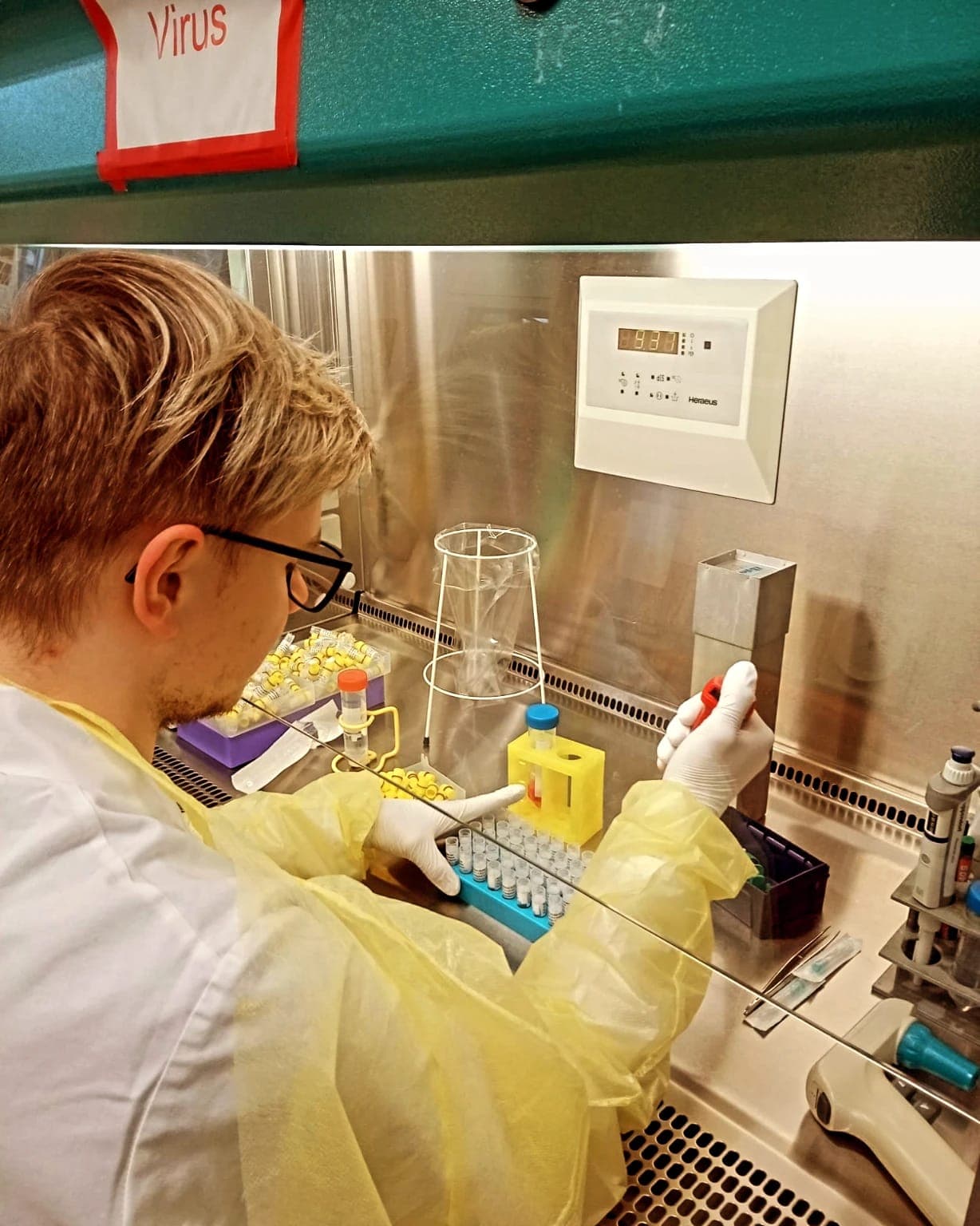
Virologist answers questions from the community
Hello, my name is Gian Luces Sauerzweig and I am studying in the master's program Infection Biology and Immunology with a focus on virology and infection immunology. As part of my studies, I will soon begin my master's thesis in the field of virology. With this article I would like to take up selected questions from the community and classify them from a scientific perspective. My goal is to contribute to clarification about virological topics, to reduce misunderstandings and to present complex relationships in an understandable way.

Your free account
Save interesting articles, track your reading progress and connect with other readers. Joining Pandragora is free.
Discover more with Premium
Start a subscription to get unlimited access to all articles.
Dangerousness
TBE (tick-borne encephalitis) is an infectious disease caused by the tick-borne encephalitis virus (TBEV), the clinical spectrum of which ranges from mild, flu-like symptoms to severe neurological diseases. The incubation period is usually 7 to 14 days, but can last up to 28 days in individual cases. Typically the disease is biphasic. In the first phase, non-specific symptoms such as fever, fatigue, headache and a general feeling of illness occur. However, around 40% of infections are monophasic, which is particularly common in severe cases and in older people (≥ 65 years). After a usually one-week symptom-free interval, the second phase of the disease can begin, which is characterized by neurological manifestations such as meningitis, encephalitis or myelitis. Overall, however, around 70-95% of infections are asymptomatic or without a second phase. Adults in particular are at risk of long-term long-term effects, including chronic fatigue, persistent headaches, difficulty concentrating and neurological deficits, often in the form of paresis. These symptoms can persist for months. However, even after severe cases, it is not uncommon for a complete recovery to occur. Severe courses of the disease occur more frequently in adults than in children. About 1% of the diseases are fatal. Meningoencephalomyelitis is particularly feared, a combined inflammation of the brain, spinal cord and meninges, which is associated with a high mortality rate of around 30%. Survivors often suffer severe long-term consequences; only about 19% recover completely, while around 51% retain permanent central nervous system dysfunction.
In addition to avoiding tick bites, the most effective protection is vaccination, especially for people in endemic areas. The vaccine contains inactivated TBE viruses adsorbed on aluminum hydroxide and propagated in chicken fibroblast cell cultures. After an infection, there is usually lifelong immunity, while vaccination requires regular boosters. It is believed that many people have already developed immunity without realizing it because their infection was asymptomatic.
probability
Outside endemic areas, the risk of infection is comparatively low because infected ticks act as the main vector. However, every tick bite should be taken seriously as there is generally a risk of infection. Even if the majority of infections are mild or unnoticed, severe cases can lead to permanent health problems, which is why preventative measures are of great importance.
spread
In Germany, the endemic areas are primarily in Baden-Württemberg and Bavaria as well as in parts of Hesse, Thuringia, Saxony and Brandenburg. Individual regions in North Rhine-Westphalia, Rhineland-Palatinate, Saarland and Saxony-Anhalt are also affected. The main vector is the common wood tick (Ixodes ricinus), a species of tick that can be recognized by its characteristic coloring. In rare cases, infection can also occur through consumption of raw milk from infected animals. However, transmission from person to person is not possible, so no special isolation of sick people is necessary.
Gradients
The course of TBE is usually biphasic. In the first phase of the illness, non-specific, flu-like symptoms such as mild fever, vomiting, dizziness and headaches dominate. After a fever-free interval, the second phase begins, in which organ manifestations occur. The main focus is on central nervous symptoms, but other organs can also be affected, such as the liver or the heart muscle. In addition, arthralgias often occur. Particularly feared is infection of the central nervous system, which can manifest itself in the form of meningitis, encephalitis or meningoencephalomyelitis with flaccid paralysis. While older people often develop more severe illnesses, the disease in children usually manifests itself in the form of meningitis.
Why are viruses prone to mutation?
A key reason for the high mutation rate of viruses lies in their enormous multiplication speed and in the functioning of their polymerases, i.e. the enzymes that are responsible for the replication of the viral genome. These often have no or only very limited error correction. This means that when the genome is copied, errors regularly occur that are not corrected and manifest themselves as mutations. Since many viral polymerases work comparatively imprecisely, a large number of such mutations can accumulate. This is advantageous for viruses because it allows them to quickly adapt to changing conditions and evade the immune system.
How do viruses and bacteria mutate?
Viruses and bacteria, just like all other living things, are subject to continuous genetic changes. Mutations, i.e. changes in genetic information, occur in their genome, regardless of whether it is DNA or RNA. The vast majority of these mutations have a negative impact because they cause important proteins to no longer function correctly. Such changes represent a selection disadvantage and generally do not prevail.
However, a small proportion of mutations may be beneficial. These lead, for example, to functionally improved proteins or to structural changes that enable pathogens to better escape the immune system. Such mutations provide a selection advantage and can therefore become established in a population.
Mutations arise, among other things, from external influences such as chemicals or radiation, but also fundamentally from errors in the replication of the genome. This happens particularly often with viruses because their polymerases, i.e. the enzymes that reproduce DNA or RNA, usually have no or only a limited correction function. As a result, errors persist and can accumulate over time.
What is your opinion on the Corona epidemic?
Formulating a direct opinion on the corona pandemic is not easy because many different aspects have to be taken into account. The focus is on the virus COVID-19, which is characterized by a high infection potential and can cause both mild and severe courses of the disease. What is particularly problematic is that infection is possible during the incubation period. This makes containing the spread much more difficult because infected people cannot be identified based on symptoms alone.
Basically, I think measures such as mask requirements and lockdowns are extremely useful. Combined with vaccinations, they are among the most effective means of controlling the spread of such a virus. However, in my opinion, a major mistake was that these measures were not implemented consistently enough. Although I am not an epidemiologist and may not take all factors into account, I am convinced that a stricter and clearly limited lockdown, consistently enforced, would most likely have contributed to greater containment of the pandemic. I see a similar problem with the mask requirement. Although it was an important and correct measure in principle, it was often not optimally implemented in practice. Many people used simple surgical masks, which primarily hold back larger droplets but do not offer reliable self-protection against infection. Although this reduces the risk of infecting others, it does not provide complete protection. Higher quality masks such as FFP2 or FFP3 masks offer significantly better protection, especially if they are worn correctly. In my opinion, more consistent use of such masks could have further increased the effectiveness of the measure.
Despite this criticism, I am convinced that, overall, the measures taken have made a decisive contribution to preventing an even greater catastrophe. At the same time, however, I also see weaknesses in the political handling of the situation. Decisions sometimes appeared inconsistent, and some information was not always communicated to the public clearly or differentiated enough. This has contributed to increasing insecurities. Nevertheless, I personally had great trust in scientific institutions like the Robert Koch Institute. The experts working there have the necessary expertise and have worked to the best of their knowledge to make well-founded recommendations and advise both politicians and the population.
I have a clear position on the subject of vaccines. In my opinion, a consistent vaccination requirement would have made sense, as numerous myths and misinformation have spread around vaccines. I see a central problem as part of the population increasingly distrusting scientific experts, even if they are directly involved in research and development. This development makes it considerably more difficult to deal with the situation objectively. I myself am very positive about the vaccines. The mRNA vaccines in particular represent a significant innovation: they are effective, can be adapted comparatively quickly and can be produced in large quantities. In addition, their application is based on an exceptionally extensive scientific data base. The speed and intensity of research in this area are almost unprecedented and have had a lasting impact on vaccine development.
How do you feel about the corona vaccination? / What do you think about corona vaccines?
The short version first: I am a big supporter of corona vaccines. In particular, the development of mRNA vaccines has opened up completely new possibilities for future vaccination strategies - based on data on a scale that has never been seen before. Of course, as with any vaccine, hypersensitivity reactions can occur. However, both the likelihood and the severity of such reactions are usually significantly lower than the risks of contracting COVID-19. In addition, mRNA vaccines can be adapted comparatively quickly to new virus variants, which enables a flexible response to genetic changes. My personal impression from discussions with experts, whether virologists, immunologists or doctors, is also consistently positive. Many of the concerns circulating are not scientifically based, and the vaccines are considered safe and effective overall. However, the protective effect decreases with the emergence of new variants against which the vaccine is not specifically adapted. However, this is not due to the vaccine itself, but rather because the immune system is less able to recognize changed virus structures.
However, there are two key challenges that vaccine research is currently addressing:
First: The vaccines offer very good protection against severe cases and sometimes also against mild illnesses, but do not completely prevent infection. The reason lies in the mechanism of action: The vaccine is administered intramuscularly and triggers an immune reaction in which specific T and B cells are formed. Among other things, these produce IgG antibodies that circulate in the blood and can effectively fight the virus there. The problem, however, is that the virus usually enters the body through the mucous membranes of the respiratory tract. IgA antibodies, which act locally in the mucous membranes, play a particular role there. However, these are only induced to a limited extent by an intramuscular vaccination. Therefore, a vaccine that is absorbed directly through the mucous membranes (e.g. B. inhalative), theoretically more suitable for preventing infection at the point of entry. Corresponding approaches are being researched, but are not yet sufficiently effective. In the long term, a combination of intramuscular and inhaled vaccination could offer the best protection.
Second: According to current knowledge, vaccination does not offer guaranteed lifelong protection. Although memory cells are formed that persist over a long period of time, permanent, lifelong immunity does not seem to be guaranteed. The exact reasons for this are not yet fully understood. It is possible that the number or stability of these cells decreases over time, resulting in reduced protective effectiveness. A separate article will be published on this soon.
Can or are there viruses that affect our DNA or can mutate?
Yes, such viruses actually exist. They are called oncoviruses because they can promote the development of cancer by affecting DNA and the regulation of host cells. A particularly well-known representative is the human papilloma virus, which primarily causes warts. However, in addition, it is responsible for about 97% of cervical cancer cases and also plays an important role in the development of vaginal, penile, anal, and mouth and throat cancers. HPV can also be involved in the development of basal cell carcinoma (white skin cancer).
Another important example is the Epstein-Barr virus. This virus can multiply uncontrollably and contribute to the development of various cancers, particularly in immunocompromised people, such as those infected with HIV or those who have had organ transplants. These include Hodgkin's disease, Burkitt's lymphoma, other lymphomas and the so-called post-transplant lymphoproliferative disease.
The hepatitis B virus and the hepatitis C virus are also important oncoviruses. They infect the liver and, in the long term, can lead to liver cirrhosis, which can then develop into hepatocellular carcinoma. A possible connection with pancreatic cancer is also being discussed for HBV. Overall, these viruses, together with other oncoviruses, belong to a group of pathogens that are responsible for around 10 to 15% of all cancer cases worldwide.
Other examples of oncoviruses are human herpesvirus 5/human cytomegalovirus (HHV-5), human herpesvirus 8/Kaposi's sarcoma herpesvirus (HHV-8), human T-lymphotropic virus 1 (HTLV-1), human polyomavirus 1 (HPyV-1), human polyomavirus 2 (HPyV-2), human polyomavirus 5 (HPyV-5). and simian virus 40 (SV40). Oncoviruses contribute to the development of cancer by interfering with the regulation of host cells. They often integrate their genetic material into the genome of the infected cell and thereby change important genes by activating growth-promoting oncogenes or switching off protective tumor suppressor genes. In addition, many of these viruses produce so-called oncoproteins that override the cell's central control mechanisms, for example by inhibiting proteins such as p53 or Rb. Chronic infections also lead to persistent inflammation and increased cell division, which increases the likelihood of mutations. At the same time, oncoviruses can disrupt DNA repair and evade the immune system, allowing damaged cells to survive longer. Overall, this can lead to cells multiplying uncontrollably and causing cancer.
Thank you for your good questions ^^
Share or save this article
Share this post or save it for later. A like helps make relevant content more visible.
We place great emphasis on accuracy in our research. Nevertheless, errors can occur. We also recommend reading the corresponding primary literature listed in the sources. The content on Pandragora is for general information only and does not replace professional medical advice or treatment. Use of the information provided is expressly at your own risk and responsibility; any liability is excluded.